Graphic Design
Graphic Design and AI Trends & Their Impact on Creative Markets

Imagine opening your favorite design app and watching it instantly turn a rough idea into a polished visual along with color schemes, font recommendations, and styles that are precisely what your brief calls for. That’s exactly what today’s blend of graphic design and AI feels like. AI isn’t just another tool for designers; it’s actively redefining creativity by changing how ideas are formed, executed, and delivered. The deeper artificial intelligence gets into the creative process, the more designers’ roles, agencies’ expectations, and the entire creative market’s direction change.
This blog post is going to discuss these transformations along with the latest Graphic Design and AI trends and how they are altering the process of visual content creation. According to zipdo, 45% of the small design firms have incorporated AI into their work and that 52% of the designers are frequently using the AI-powered editing tools.
What is AI Graphic Design?
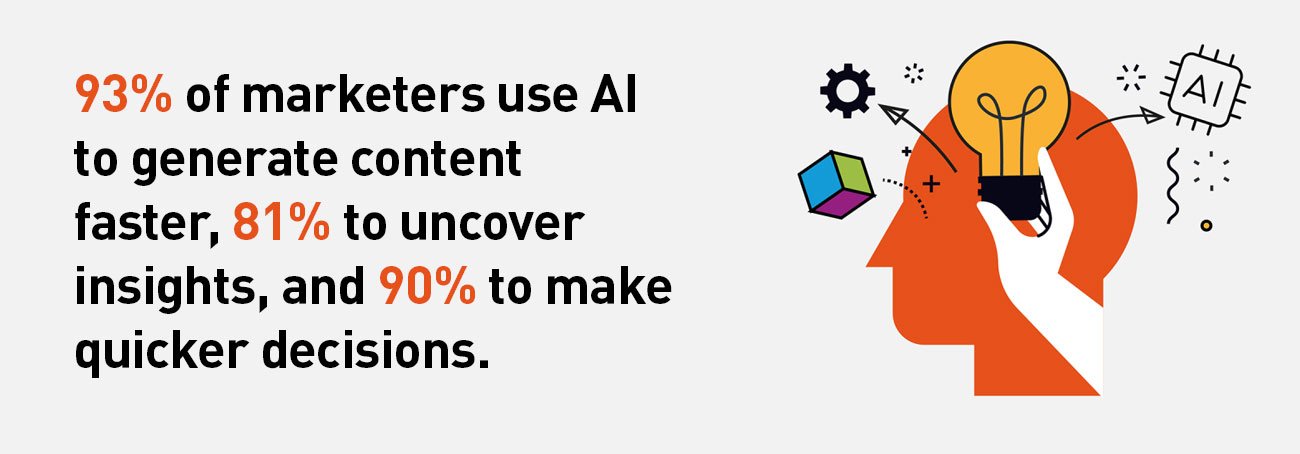
AI graphic design can be described as the integration of artificial intelligence tools and algorithms to facilitate and streamline designers’ workflows. The tools used are based on visual pattern recognition, rapid generation of ideas, and making it easy for designers to transition from mere thoughts to finished graphics with major savings in energy and time.
- AI in graphic design aims to speed up the process, make it smarter, and reduce costs.
- It increases the creative output of designers, takes over the boring part of their work, and keeps the brand identity consistent throughout all the projects.
- It can be used for the whole range of activities, from resizing graphics, background removal, and color correction to template generation.
It connects design elements and uses them to create visuals based on user instructions. If a user gives a command like “Design a modern, neat, and techy poster,” the AI will take the request and simultaneously provide a number of design alternatives. The cooperation between man and machine is what turns the whole process of design into a quicker, more accessible, and more creative time than ever before.
The modern graphic design scenario sees AI as a strong player because of its ability to comprehend visual patterns, produce new ideas, and take over the time-consuming manual tasks of the past. AI has the capability to identify what is attractive in visuals and to incorporate those characteristics into new concepts by means of learning from vast arrays of already existing designs.
Thus, the designers are allowed to conduct their work expeditiously, to take broader creative directions, and to sharpen their ideas with more lucidity. No longer do they have to deal with monotonous tasks; rather, they are able to direct their energies towards strategy, storytelling, and creating impactful visual experiences. Below is an explanation of how designers integrate AI into the design process:
1. Data and Pattern Recognition
- Developers train AI extensively using diverse datasets containing art and design pieces that already exist.
- Then it dissects and analyzes the datasets for such aspects as composition, color harmony, balance, and style.
- At last, AI identifies what “good design” looks like based on statistical patterns in terms of statistics and either copes with it or makes it better.
2. Generative Capabilities
- Generative AI (for example, DALL·E, Firefly, and Midjourney) is a new technology that produces visuals based on text input.
- For instance, entering “a minimalist poster for a tech startup” will quickly yield several different design concepts.
3. Automation of Repetitive Tasks
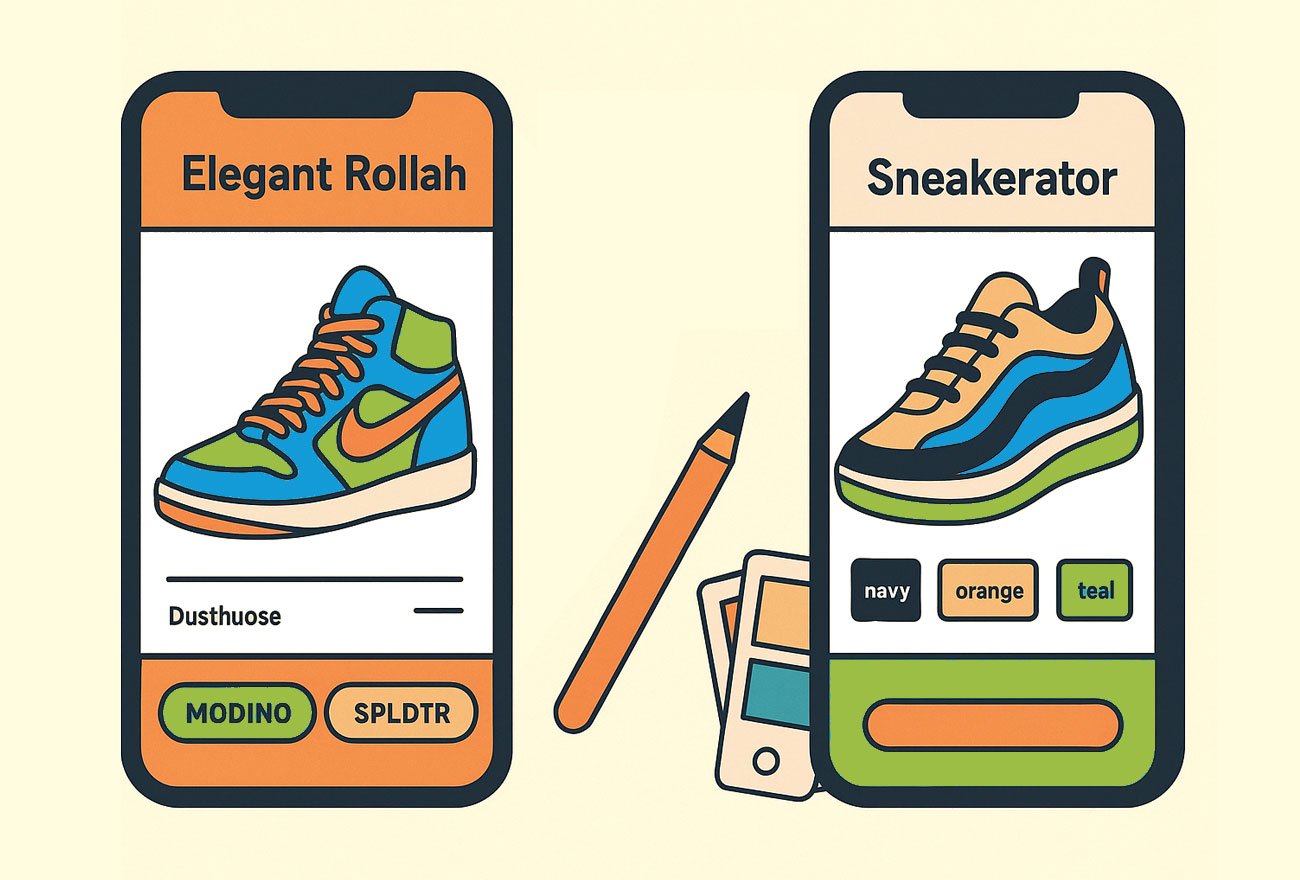
- AI takes over the processes of resizing, removing backgrounds, enhancing images, and adjusting layouts.
- It lets designers be alone with the more human side of the work, i.e., the creative and strategic aspects.
4. Smart design Recommendations
- These are the digital tools that propose color schemes, fonts, or even compositions based on the project goals and the audience data.
- AI can tailor the designs according to the specific demography or the branding style that is to be used.
Key Applications of AI in Design

AI Graphic Design trends are majorly influencing the design industry from the way designers create, modify, and produce visual content across sectors. With its capability to process and evaluate data, come up with concepts, and do machine production, it is no more a mere technological tool but a strong creative collaborator. AI-driven solutions accelerate workflows and reshape the design industry of workflow but also better accuracy and a massive scale of personalization, which were unheard of just a few years back.
Here are the main points that highlight the key effect of AI design is having in present-day graphic field:
1. Branding
Automated logo, color palette, and brand identity concept generation are some of the tasks performed by AI tools. In minutes, they give dozens of variations, assisting designers in quickly going through different creative directions.
2. Digital Advertising
AI provides ad visuals that change dynamically according to user behavior, preferences, or real-time data. As a result, ad campaigns are very personalized and of high performance.
3. Web & UI Design
AI helps designers to make wireframes, layout suggestions, and responsive design options. AI instantly adjusts interfaces to different screens and user behaviors.
4. 3D & Motion Graphics
AI is a powerful tool for simplifying the entire workflow of modeling, animation, and rendering. With not much labor, a designer could produce 3D objects, animate scenes, or add special effects.
Read Also: AI vs Human Creativity in Design: Striking the Perfect Balance
Benefits of AI Graphic Design
By adding AI to the design process, the fast, smart, and artistic combination of the technology comes into play. Not only does it smooth out the performance of boring tasks, but also it provides new lines of creative thought that the designers might not have ventured into by themselves. Faster processes and cheaper costs are the advantages that businesses gain, while the teams receive more distinct perceptions to render better design choices. Industry surveys suggest AI can help you increase productivity by up to 35 percent. These benefits make AI one of the most promising revolutions in the creative industry.
- Expands creative possibilities by generating unexpected results: AI often generates ideas humans never considered, pushing the limits of creativity. Such surprising concepts play a major role in reshaping the way designers think about the process of making changes in style, composition, and the whole approach.
- Design is no longer a preserve of the designer’s domain: Easy-to-use AI tools allow anyone, designers or non-designers to create high-quality designs entrepreneurs, marketers, or small business owners to produce graphics of the same quality as professionals without technical know-how. This brings design closer to the masses and lessens the reliance on highly skilled personnel and expensive software.
- Cost-saving and shorter lead time for businesses: AI not only curtails, AI reduces the cost required in every stage of the design process but also accelerates the pace of the work done by the design team. The result is the company being able to launch its marketing, content, and branding projects way faster than before.
- Enhances decision-making with data-driven insights: One of the key functions of AI is to analyze audience behavior, performance metrics, and design patterns to give recommendations for the creative process. This ensures that designers and teams make more informed and strategically aligned decisions, as per the audience’s expectations.
Human + AI: Finding the Right Blend
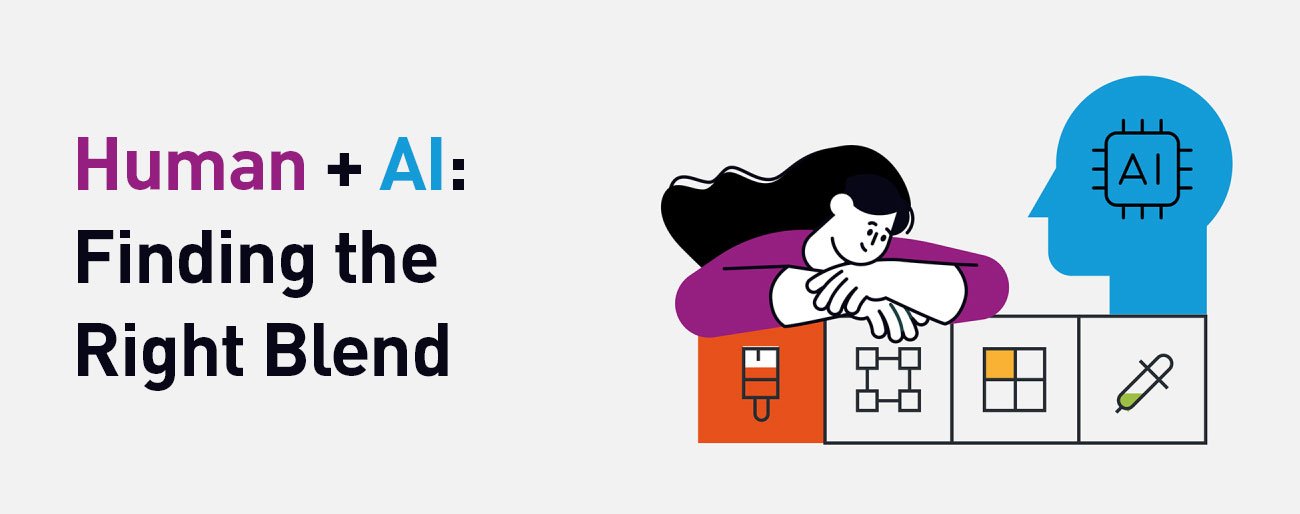
AI has gained considerable power in the design field but is still a tool, not a substitute for human imagination. The machine presents creativity, working faster and giving more options, but the human aspect of great design still lies in emotionality and strategy. Finding the middle ground guarantees that technology aids creativity instead of overpowering it.
Human Role
Human creators impart to the design field the qualities that are strictly human, such as the ability to feel, the cultural comprehension, and the storytelling—something that AI could never copy. These factors are crucial for the design to be palatable and for the visuals to be associated with the actual human lives.
AI’s Role
AI is the champion of speed, the inventor of ideas, and the source of one thousand variations and data-derived discernment. It allows the designers to go through the options much quicker, it takes over the monotonous tasks, and it assists in making the right creative choices based on data.
The Balance
The best approach is to let AI handle repetitive, technical tasks of a routine, technical, or exploratory nature while the designers work on conceptual thinking, brand storytelling, and emotional nuance. This division brings in both productivity and creativity.
Takeaway
The best of the creative world comes when instinct from the human side is the leader, and AI’s accuracy is the support. This partnership makes the whole process more innovative, efficient, and profoundly human.
Real-World Examples: AI in Action
Case Study 1: Small Agency Increases Output with AI
A creative agency located in London utilized Midjourney and Canva AI among other tools to accelerate the creation of ad visuals. Their team spent 3-4 days for each project prior to using AI. The time required for a project was reduced to 18-24 hours after the application of AI technology. Consequently, they were able to accept 27% more clients without hiring additional designers, and their revenue increased in just three months.
Case Study 2: AI Personalization Helps E-commerce Brand to Augment CTR
A skincare brand implemented AI-generated design variations for their Facebook and Instagram ads. The AI not only examined the behavior of the audience but also designed the visuals according to their preferences: switching models, skin tones, and headline placements. The outcome was a remarkable increase of 42% in their click-through rate, and the design production time was reduced from weeks to hours.
How Visual Best Combines AI + Human Creativity
At Visual Best, we combine human creativity with advanced AI technology. The designers use artificial intelligence to speed up the process and improve accuracy; at the same time, they provide the emotional depth and storytelling that only humans can create. The services we offer include:
Branding – We create a strong brand identity for businesses backed with clarity, consistency and emotional connection with creative visuals
Example:
Develop a full brand identity including logo, color system, typography, and visual guidelines for a tech startup adopting AI-powered solutions, ensuring the brand feels credible and trustworthy.
Motion Graphics – We design creative story-driven motion visuals that increase engagement and improve a brand’s communication with their users across digital platforms
Example:
Design a 20–30 second animated explainer highlighting how a company uses AI responsibly combining sleek illustrations with smooth transitions for social media campaigns.
UI/UX – We deliver intuitive, personalized and user-centric digital experiences with smooth design and functional flow support
Example:
Design a user-friendly dashboard interface for an AI analytics platform, focusing on clean layout, easy data interpretation, and guided interactions.
Content design – We create visual content that communicates ideas clearly across formats—infographics, presentation decks, social posts, reports, and more.
Example:
Build an insight-driven infographic breaking down global AI adoption trends in the creative industry, optimized for LinkedIn and website use.
Conclusion: A Collaborative Future
The rule of thumb in the domain of graphic design is that AI is not the substitute for the human touch but rather the partner that is redefining the manner of human touch. Designers no longer have to rely on their creativity alone, and AI will not work against them but will rather be the one to provide fast, diverse, and intelligent ideas that, in the end, will improve the entire creative process. As per SEO Sandwitch report the global AI-design market will experience massive growth in the upcoming years, as 61% of design professionals have already incorporated AI tools into their work.
Designers who embrace AI will shape the future. When designers are intuitive, AI is the one who makes it happen, and so the end result is more radical, more intelligent, and more influential. We will soon reach a point where AI becomes a natural part of every design workflow.
Future-proof your brand’s design with Visual Best AI-Powered design solutions. Schedule a demo today!
FAQs
Q1. What is AI graphic design?
AI graphic design is the integration of artificial intelligence tools and algorithms into the design workflow. These tools use visual pattern recognition, generate ideas rapidly, automate repetitive tasks, and help designers move from concept to finished visuals faster. AI doesn’t replace designers—it acts as a creative collaborator that speeds up production while keeping brand consistency.
Q2. How does AI work in graphic design?
AI works in graphic design through four main capabilities: data and pattern recognition from large design datasets, generative capabilities using tools like DALL-E, Firefly, and Midjourney to create visuals from text prompts, automation of repetitive tasks like resizing and background removal, and smart design recommendations for colors, fonts, and layouts based on project goals.
Q3. What are the latest AI trends in graphic design?
The latest AI trends impacting graphic design include automated branding with logos and brand identity concepts, dynamic digital advertising personalised in real time, AI-assisted web and UI design with wireframes and responsive layouts, and AI-powered 3D and motion graphics for faster modeling, animation, and rendering across creative projects.
Q4. What are the main benefits of using AI in graphic design?
The main benefits are expanded creative possibilities through unexpected AI-generated ideas, democratised design that lets non-designers create professional visuals, cost savings and shorter project lead times (up to 35% productivity gains), and data-driven insights that help designers make smarter, audience-aligned decisions and launch faster campaigns.
Q5. Will AI replace human graphic designers?
No. AI is a powerful tool but cannot replace human creativity. Designers bring emotional intelligence, cultural understanding, and storytelling that AI can’t replicate. The best approach is a balance—AI handles repetitive, technical, and exploratory tasks, while humans focus on conceptual thinking, brand storytelling, and emotional nuance, creating stronger results together.
Q6. How is AI changing the creative industry and design market?
AI is rapidly transforming the creative market—45% of small design firms have already adopted AI, and 52% of designers regularly use AI-powered editing tools. Globally, 61% of design professionals are incorporating AI into their workflow. This shift is reshaping how agencies operate, what clients expect, and how the entire creative market grows.
Q7. How can businesses combine AI and human creativity for better design results?
Businesses get the best results by pairing AI’s speed and precision with human creative direction. Agencies like Visual Best use AI to accelerate workflows and explore design variations, while human designers add storytelling, emotional depth, and brand strategy. This hybrid model delivers faster, smarter, and more impactful design across branding, motion graphics, UI/UX, and content.