Report Design , Strategy
Annual Report vs Corporate Report vs Business Report: Which Do You Actually Need in 2026?
A marketing head at a Bangalore SaaS company emailed me last month with a brief. “We need an annual report designed. Budget is ₹80,000. Timeline is three weeks.”
I asked one question back. “Is this for your investors and regulators, or for your team, board, and prospective clients?”
She wrote back: “The second one. Why?”
Because if it’s for your team, board, and prospective clients, you don’t need an annual report. You need a business report or a thought leadership publication, and the ₹80,000 budget with a three-week timeline actually works for those. An annual report at the standard she was imagining would cost ₹4 to ₹8 lakh and take three months, because annual reports are a genuinely different animal built for a genuinely different purpose. She was about to commission the wrong document.
She’s not the only one. The confusion between annual report, corporate report, and business report is one of the most common misunderstandings in corporate reporting, and it costs companies real money every year. Sometimes it costs them the entire report budget spent on the wrong format. Sometimes it costs them credibility with the audience they were actually trying to reach. Sometimes it costs them both.
This guide is the decision framework I wish more buyers had before they briefed us. Three formats, three purposes, three audiences, and a clear way to know which one your specific situation actually needs.
The three formats at a glance
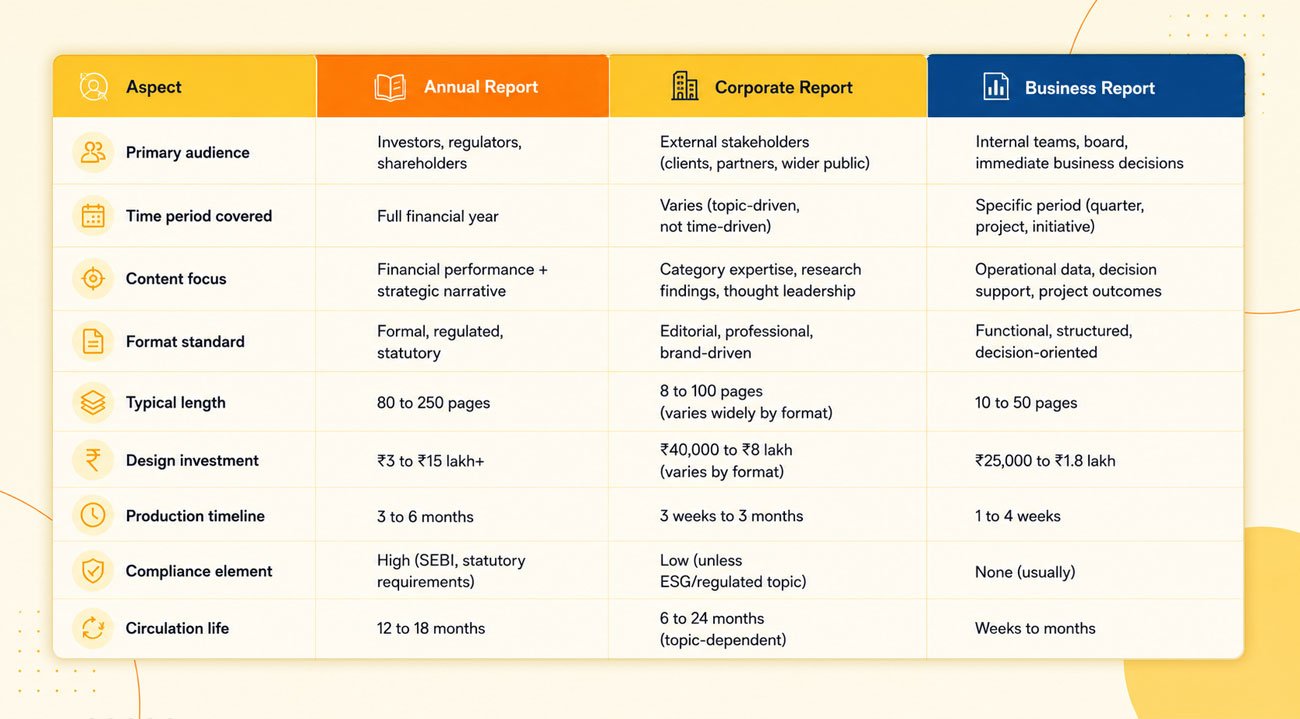
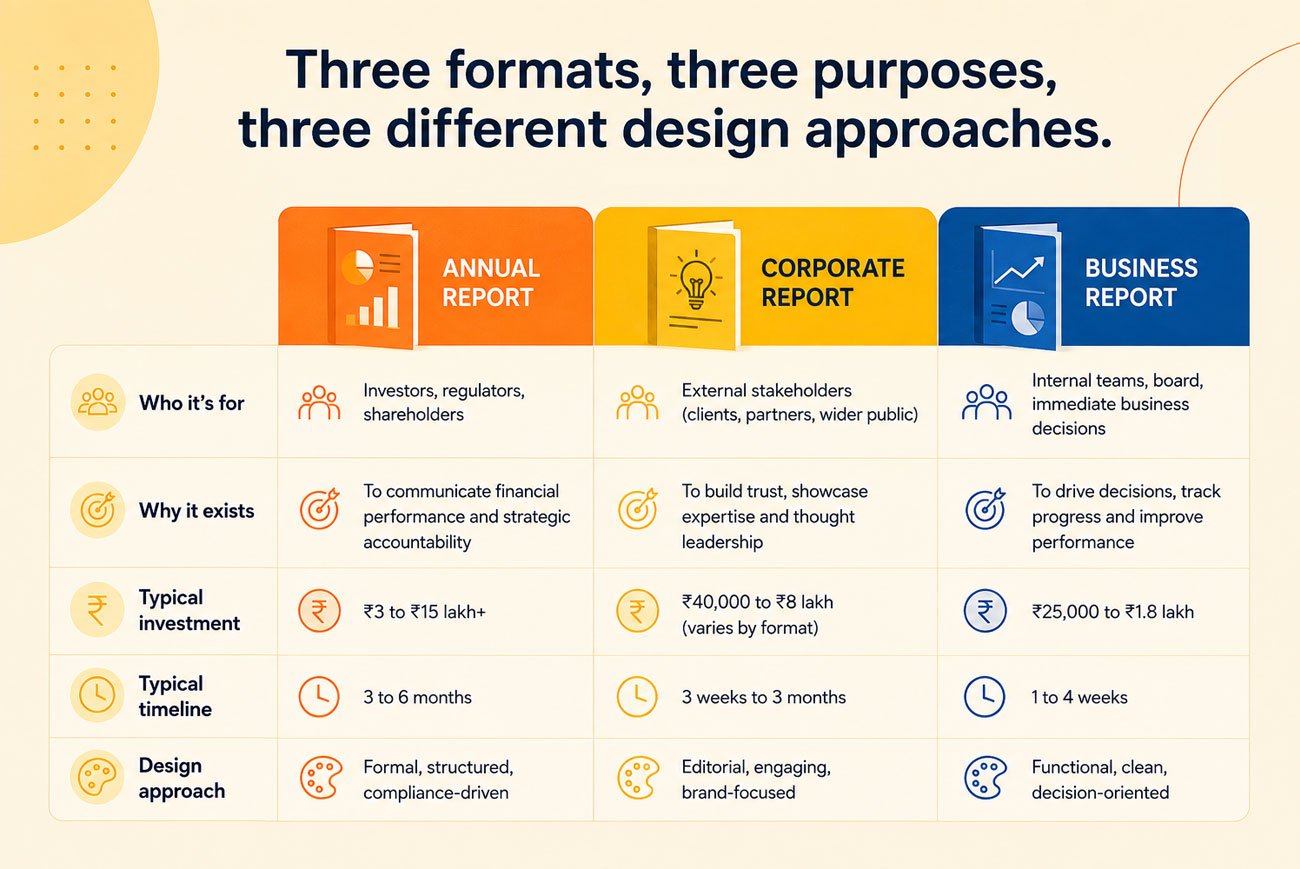
Before the detailed breakdown, here’s the quick version. Read the whole post if you’re planning a report cycle. Skim this table if you just need to know which format to commission today.
Now the detail worth actually reading.
What each format actually is
Annual Report
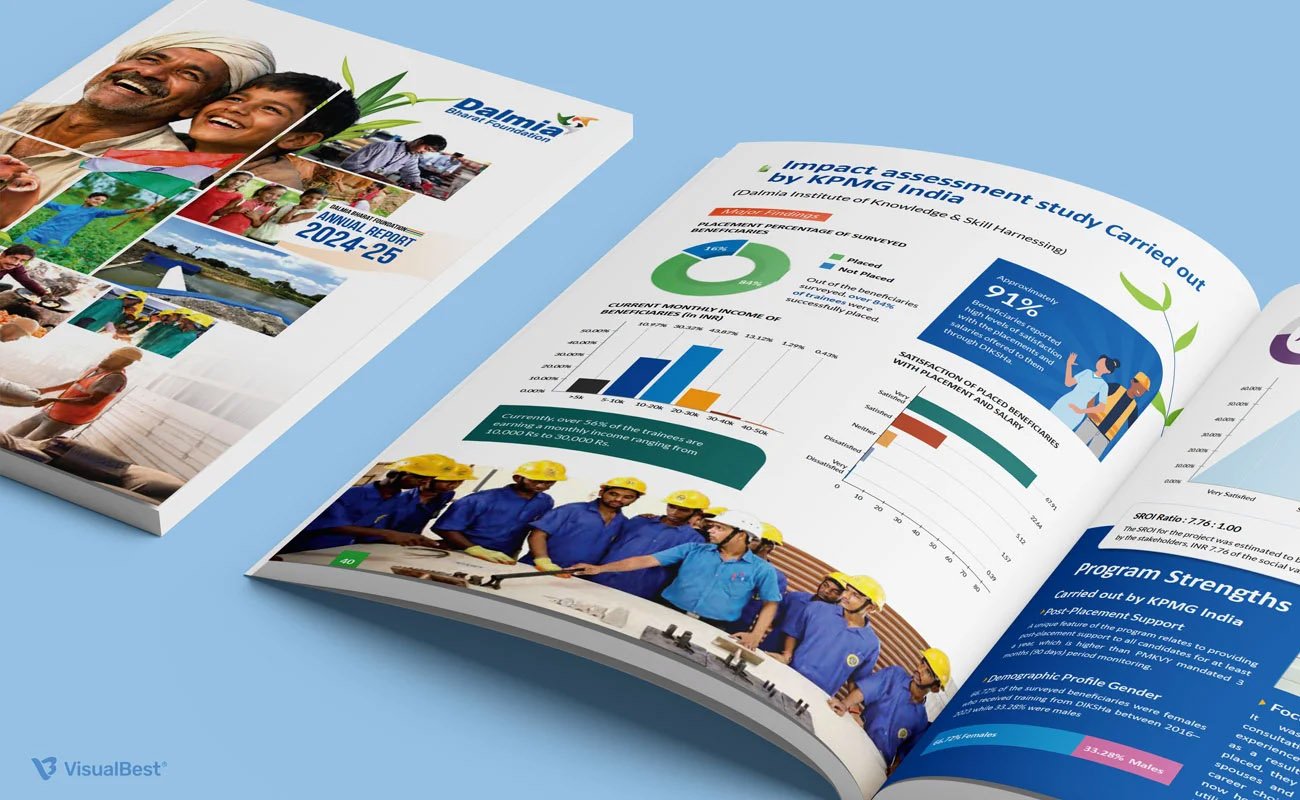
An annual report is a specific formal document that publicly listed and larger private companies produce once a year, combining financial performance with strategic narrative for investors, regulators, and shareholders.
In India, this format is governed by SEBI regulations for listed companies, with mandatory sections (Directors’ Report, Management Discussion and Analysis, Corporate Governance Report, Financial Statements with auditor certification, notice of AGM), specific disclosure requirements, and formal review processes. NGOs and larger private companies often produce voluntary annual reports following similar conventions.
The audience is specific and known: investors making capital allocation decisions, regulators assessing compliance, shareholders exercising governance rights, and increasingly, ESG-focused stakeholders assessing sustainability performance. The audience expects rigor, transparency, and adherence to reporting conventions.
Because of the compliance layer, the audience expectations, and the sheer volume of content, annual reports carry the highest design investment and longest production timeline of any regularly-produced corporate document.
You need an annual report when: you’re a listed company (mandatory), a large private company communicating with investors, a nonprofit meeting donor and regulatory expectations, or an organization whose stakeholders expect formal annual accountability.
Corporate Report
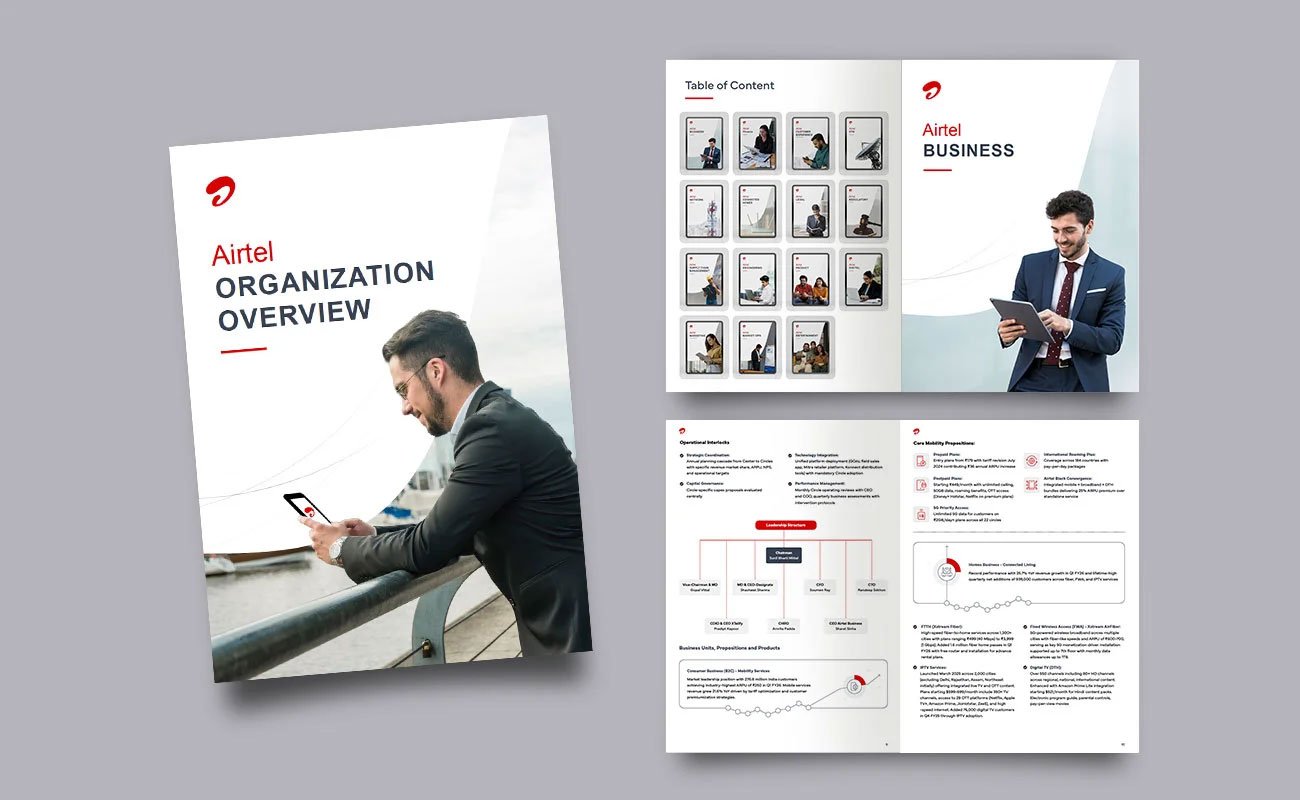
A corporate report is a much broader category covering any report produced by a company for external communication that isn’t the annual report specifically. It includes white papers, research reports, thought leadership publications, sustainability and ESG reports (unless integrated into the annual report), industry reports, impact reports, market analyses, and specialized topic publications.
Unlike annual reports, corporate reports are topic-driven rather than time-driven. They’re produced when the company has something specific to communicate, argue, or share expertise on. There’s no calendar mandate, no statutory format, and typically no compliance requirement beyond what’s specific to the topic (GRI or CSRD for sustainability reports, for example).
The audience varies dramatically by format. A white paper targets B2B decision-makers researching a solution. A thought leadership report targets category peers and prospective clients. A sustainability report targets ESG-focused investors and regulators. A research report targets academics, analysts, and industry participants. The design decisions follow the audience.
Because the category is so broad, so are the pricing and production timelines. A quick B2B white paper design might run ₹40,000 and take 3 weeks. A flagship industry report might run ₹8 lakh and take 4 months.
You need a corporate report when: you’re producing lead generation content (white papers), publishing original research or thought leadership, meeting sustainability reporting requirements, communicating specialized expertise to external audiences, or building category authority through published perspective.
Business Report
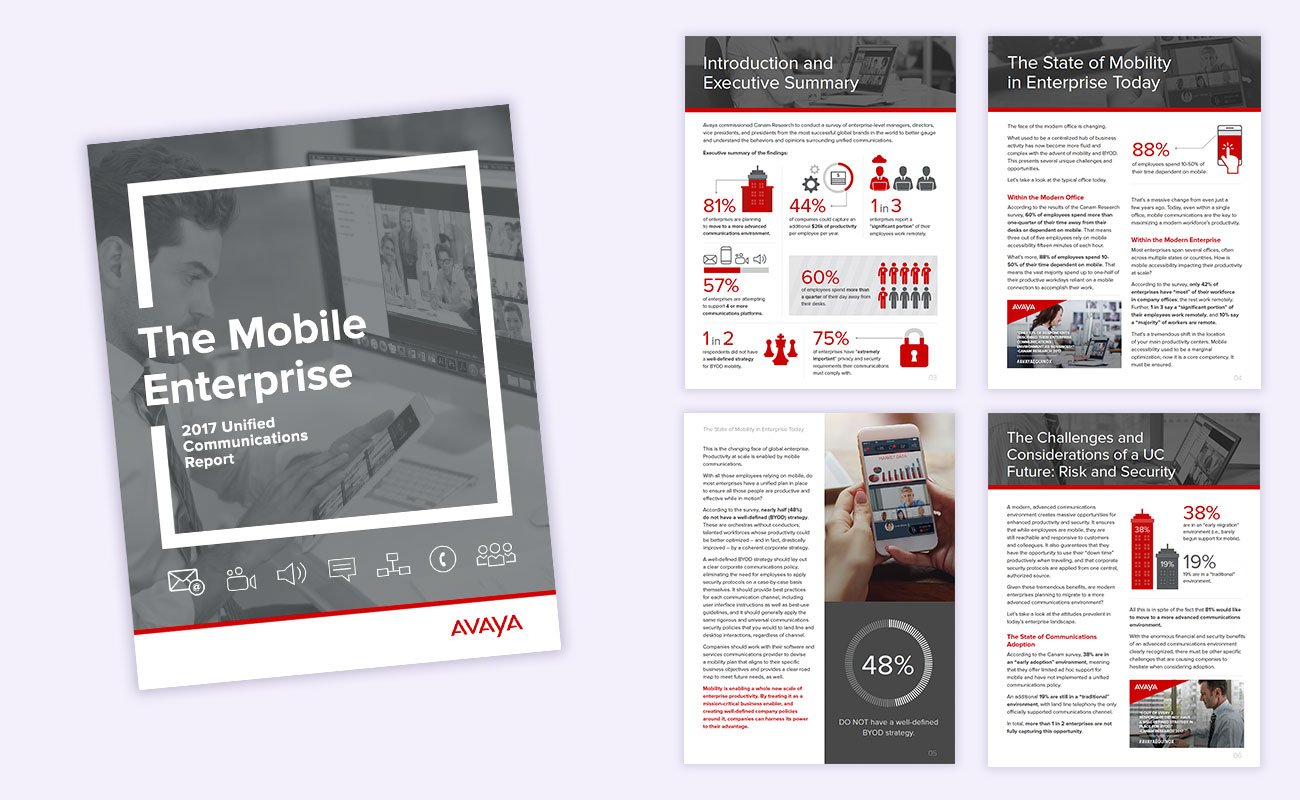
A business report is typically a more functional, decision-oriented document produced for internal audiences or specific business situations. It includes quarterly business reviews, project outcome reports, departmental performance summaries, board briefing documents, operational status reports, strategic planning documents, and internal analytical reports.
The audience is usually internal (leadership, board, department heads, project stakeholders) rather than external. The purpose is decision support, accountability, and internal communication rather than external positioning or brand building.
Design conventions for business reports are functional rather than editorial. Clean structure, clear data visualization, easy navigation, and readable formatting matter more than premium production values. The report exists to inform decisions, not to shape external perception, and its design should reflect that.
Business reports typically have the shortest production timeline and lowest design investment of the three formats, because they don’t need the compliance rigor of annual reports or the editorial polish of corporate reports.
You need a business report when: you’re documenting operational performance for internal audiences, briefing your board or leadership on specific topics, preparing project outcome documentation, producing quarterly business reviews, or handling any structured internal communication that needs professional format without external brand pressure.
The four most expensive mistakes buyers make when choosing wrong
I’ve watched companies mismatch these formats consistently enough to catalog the specific failure patterns. Four of them cost real money:
1. Commissioning an annual report treatment for what should be a business report
The typical scenario: a marketing team wants a “polished report” for a board presentation or a strategic planning document. They brief it as an “annual report” because that’s the report format language they know. The vendor quotes annual report pricing (₹4 lakh+, 3-month timeline) and produces an annual report deliverable. The team ends up with an over-engineered document for an internal audience that would have been better served by a functional business report at ₹80,000 and a 2-week timeline.
The cost: roughly 4 to 5x the necessary spend, plus 2 to 3 months of unnecessary production time.
2. Commissioning a business report treatment for what should be a corporate report
The reverse scenario: a company produces external thought leadership content using an internal-style business report format. Functional structure, minimal design, spreadsheet-derived charts. The content is genuinely strong but the format signals “internal working document” to an audience that expects “published perspective.” The report gets ignored despite good content.
The cost: the entire investment in the underlying research or thought leadership, because the presentation undermines the credibility of the work.
3. Commissioning a white paper for what should be a research report
Related but distinct. A company has done genuine original research (survey data, market analysis, primary interviews) and packages it as a “white paper” because the term is more familiar. White paper design conventions (shorter length, focused argument, marketing-oriented layout) can’t do justice to the depth of the underlying research. The research gets under-published.
The cost: the research investment plus the opportunity cost of positioning your company as a category expert.
4. Commissioning an annual report when the situation only calls for an annual report design refresh
Common with mid-sized companies producing annual reports for the first time. They see “annual report” and imagine the ₹8 lakh flagship treatment when what they actually need is a ₹2 lakh compliant, well-designed annual report that meets stakeholder expectations without unnecessary complexity. Vendors happy to quote the flagship rate. Company happy to receive impressive deliverable. Neither party asking whether the treatment matches the actual audience need.
The cost: roughly 3 to 4x the necessary spend on a report that doesn’t need premium tier to succeed with its actual audience.
The decision framework
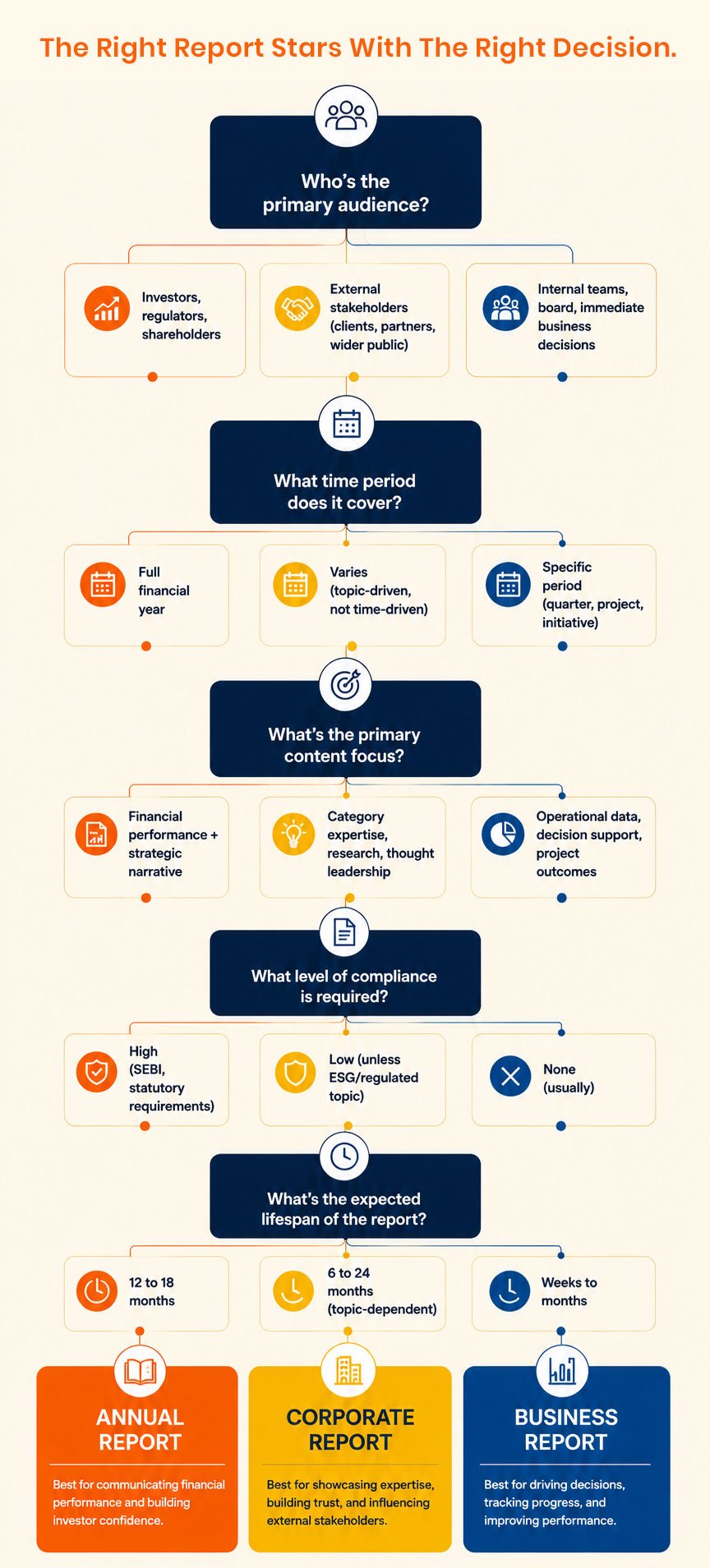
Five questions that resolve most format decisions:
- Who exactly will read this?
- Investors, regulators, shareholders → Annual Report
- External clients, prospects, industry peers, public → Corporate Report
- Internal teams, board, project stakeholders → Business Report
- What triggered the report?
- Calendar (the financial year ended) → Annual Report
- Topic (we have something specific to say) → Corporate Report
- Event or period (a project ended, a quarter closed, a decision needed) → Business Report
- Is there a formal compliance requirement?
- Yes, statutory (SEBI, tax authorities) → Annual Report
- Sometimes (GRI, CSRD, ESRS for sustainability specifically) → Corporate Report (sustainability specifically)
- No → Business Report
- What’s the intended circulation lifespan?
- 12 to 18 months → Annual Report
- 6 to 24 months (topic-dependent) → Corporate Report
- Weeks to a few months → Business Report
- What’s the audience’s expectation for polish?
- Formal, rigorous, transparent → Annual Report
- Editorial, brand-driven, authoritative → Corporate Report
- Functional, clear, decision-oriented → Business Report
If your answers cluster consistently in one column, that’s your format. If they split, read the mistakes section again and diagnose which mismatch you’re heading toward.

When the answer is actually “you need more than one”
Sometimes the honest answer to “which format do we need” is “you need two, sequenced correctly.”
Common scenarios where multiple formats work together:
Annual report + sustainability report as separate publications. Many listed Indian companies now produce their annual report as one document and their sustainability/ESG report as a separate corporate report, often with cross-references between them. This works when the sustainability story is substantial enough to warrant its own detailed treatment.
Annual report + thought leadership publication as annual pair. Some companies pair their annual report (financial and strategic accountability) with an annual thought leadership publication (industry perspective and category leadership). The annual report handles the “who we are” story; the thought leadership report handles the “what we believe” story.
Business report as foundation for corporate report. An internal business report (quarterly market analysis, project outcome documentation) sometimes becomes the underlying research for an external corporate report (published market analysis, case study white paper). The internal report gets produced first for internal decisions, then adapted with different design conventions for external publication.
Annual report + business report cadence for private companies. Larger private companies that don’t have investors requiring formal annual reports sometimes use a quarterly business report cadence with an annual “state of the company” report that synthesizes the year. This gives internal stakeholders regular updates without the compliance overhead of a formal annual report.
The right multi-format arrangement depends on your organization’s specific communication needs, budget, and stakeholder mix. Any of these combinations can work, but sequencing them wrong (or duplicating effort across them) is one of the most common mistakes we help clients unwind.
Frequently asked questions
What’s the difference between an annual report and a corporate report?
An annual report is a specific formal yearly document combining financial performance and strategic narrative, typically for investors and regulators, often with statutory compliance requirements. A corporate report is a broader category covering white papers, research reports, sustainability reports, thought leadership publications, and other topic-driven external communications. Both require professional design but serve different purposes and command different pricing.
What’s the difference between a corporate report and a business report?
A corporate report typically targets external audiences (clients, partners, industry peers, the public) with editorial-quality design and brand-driven presentation. A business report typically targets internal audiences (leadership, board, project stakeholders) with functional, decision-oriented design. Corporate reports build external positioning; business reports support internal decisions.
Do all companies need to produce annual reports?
No. Listed companies are legally required to produce annual reports meeting SEBI standards (in India). Larger private companies often produce voluntary annual reports for investor and stakeholder communication. Nonprofits typically produce annual reports for donors and regulators. Smaller companies without external investors usually don’t need formal annual reports and can use simpler formats.
Can a white paper replace an annual report?
No, but they serve different purposes anyway. A white paper is a topic-focused external publication for B2B lead generation and thought leadership. An annual report is a comprehensive yearly financial and strategic accountability document. Different formats, different audiences, different jobs.
Which report format costs the most to design professionally?
Annual reports typically carry the highest design investment (₹3 to ₹15 lakh+ for listed companies) because of compliance requirements, length, and audience expectations. Corporate reports vary widely (₹40,000 to ₹8 lakh depending on format). Business reports are typically the least expensive (₹25,000 to ₹1.8 lakh).
Can one report serve multiple audiences?
Rarely well. When companies try to make one report serve investors, prospects, and internal teams simultaneously, the report usually fails at all three purposes. Better strategy: produce the right format for each priority audience, and use cross-references or shared visual identity to link them.
How do I know if I need premium design tier or standard tier?
Premium tier is right when the report represents high-stakes external communication (investor relations, flagship publications, category-defining research). Standard tier is right when the report needs to be professional but doesn’t need to be extraordinary (routine business reports, internal documents, standard operational reports). Match investment to stakes, not to what looks impressive.

Related reading
- 📖 Annual Report Design Cost in India, once you’ve decided on annual report as the format, here’s the detailed pricing breakdown.
- 📖 Corporate Report Design Cost in India 2026, the pricing guide covering white papers, research reports, sustainability reports, and other corporate report formats.
- 📖 Best Annual Report Design Agency in India (2026 Guide), who to work with when annual report is the format you need.
- 📖 10 Annual Report Design Mistakes Companies Make, the specific design failures that undermine annual reports.
- 📖 Annual Report Design Trends 2026, what to change and what to avoid in your annual report design this year.
- 📖 From Annual Report to Social Media Campaign, how to make any report format do more work through content repurposing.