AI Design , Design Agency , Presentation Design , Strategy
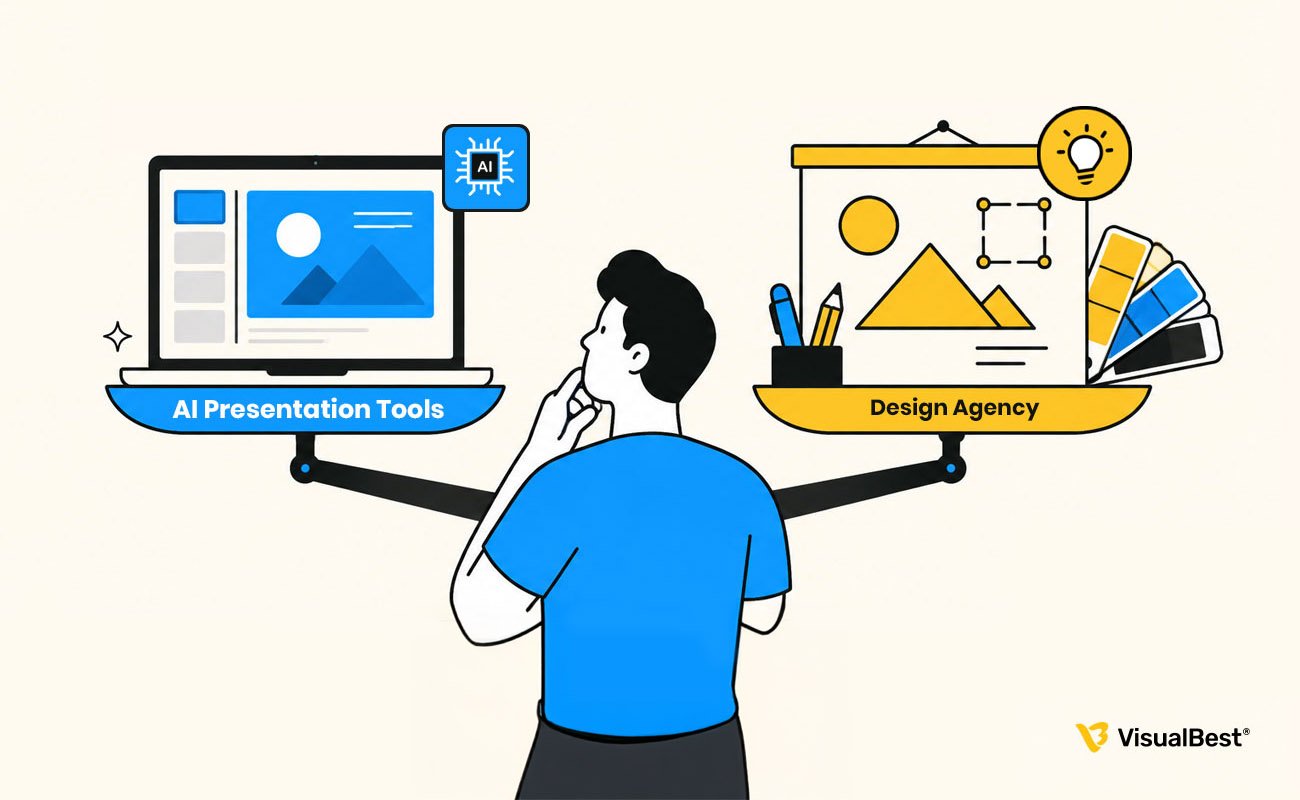
Can AI Presentation Tools Replace a Design Agency in 2026?
An Honest Take From People Who Do Both
In about thirty seconds, an AI tool can now turn a one-line prompt into a complete, decent-looking 14-slide deck. No designer, no agency, no invoice. For a category of work that used to take a professional a full day, that’s not a small shift — it’s the floor of the entire industry moving.
So here’s the question worth asking honestly, even though we’re a design agency and you’d expect us to dodge it: in 2026, do you still need presentation design agency?
The honest answer isn’t “no, AI is hype” — that’s cope, and the tools are genuinely good. It’s also not “yes, always hire an agency” — that’s self-serving, and often wrong. The real answer is a line. On one side, AI has already won and you’d be foolish to pay a human. On the other, using AI alone will quietly cost you the thing the deck was supposed to win. This post is about exactly where that line falls.
We use these tools every day. Here’s the truth as we see it.
What AI presentation tools are genuinely great at
Let’s be fair before we’re critical. The 2026 AI tools — Gamma, Beautiful.ai, Copilot in PowerPoint, Tome, and the rest — are not toys. For the right job, they’re better than hiring anyone.
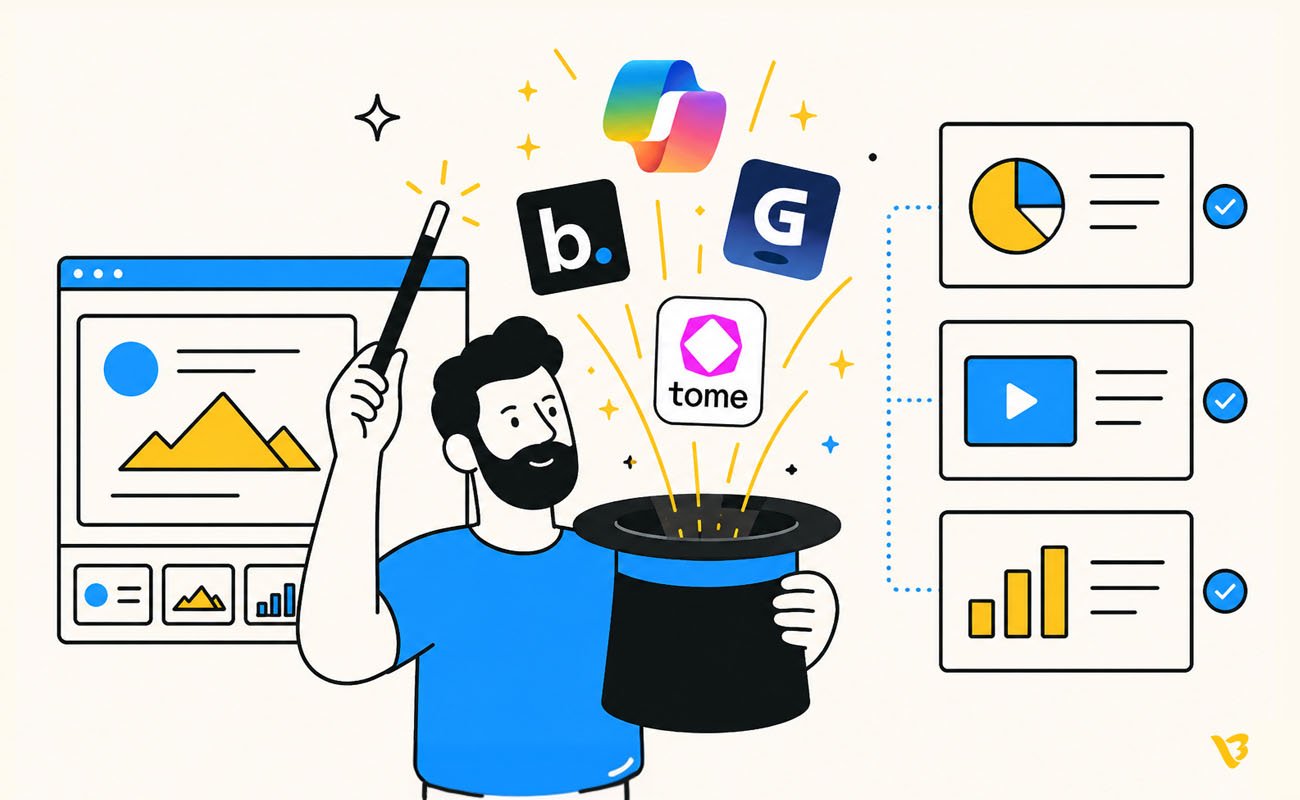
🔸 Speed from zero. They kill the blank page. A usable first draft — layout, text, images, structure — in under a minute. Nothing a human does competes with that on pure speed.
🔸 Internal and low-stakes decks. Team updates, project briefs, internal training, brainstorm docs, educational content. For decks where the job is to inform people who already trust you, AI output is more than good enough.
🔸 First drafts and structure. Even agencies use them this way. AI is a fast way to get a rough narrative skeleton on the page that a human then sharpens. As a starting point, it genuinely saves hours.
🔸 Consistency on autopilot. Pick a theme and the tool applies it across every slide — no mismatched colours, no wandering fonts. For a non-designer, that alone lifts quality.
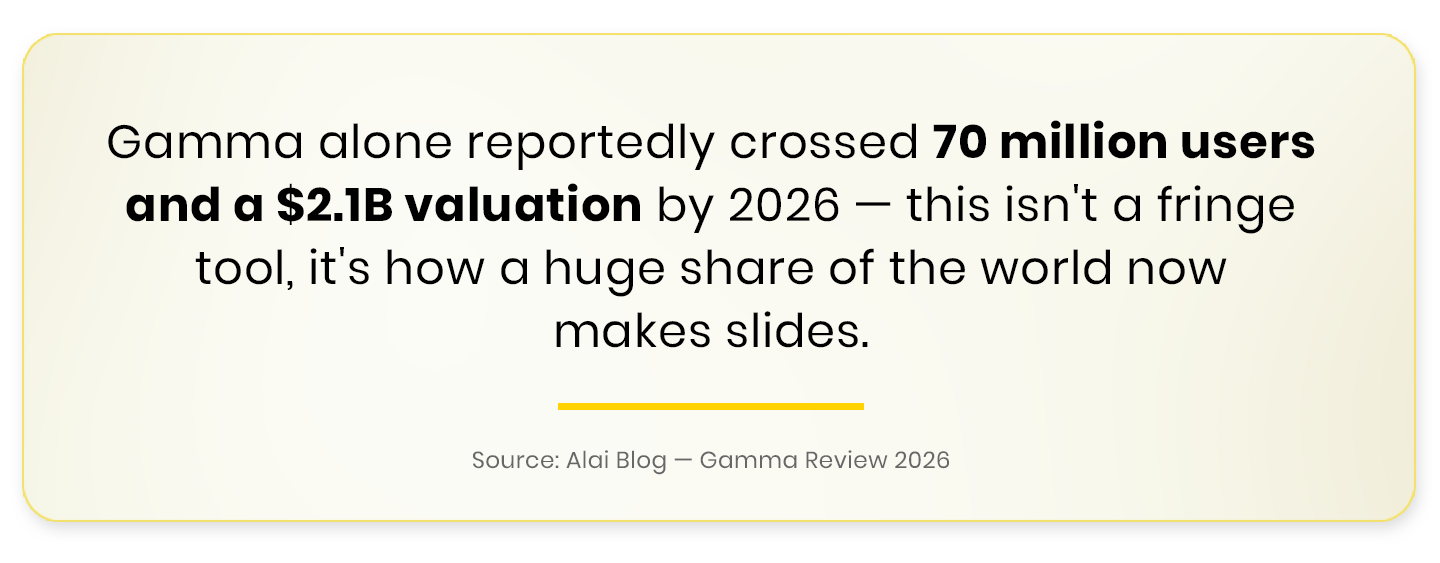
If your deck falls into any of the above, stop reading and go use Gamma. Seriously. Paying an agency for an internal status update is setting money on fire.
Where AI tools quietly fall short
Here’s the part the tool-comparison blogs underplay — and notice that even the tool vendors admit most of this. The limitations aren’t bugs that get patched next quarter. They’re structural, because they’re about the parts of a deck that aren’t really design at all.
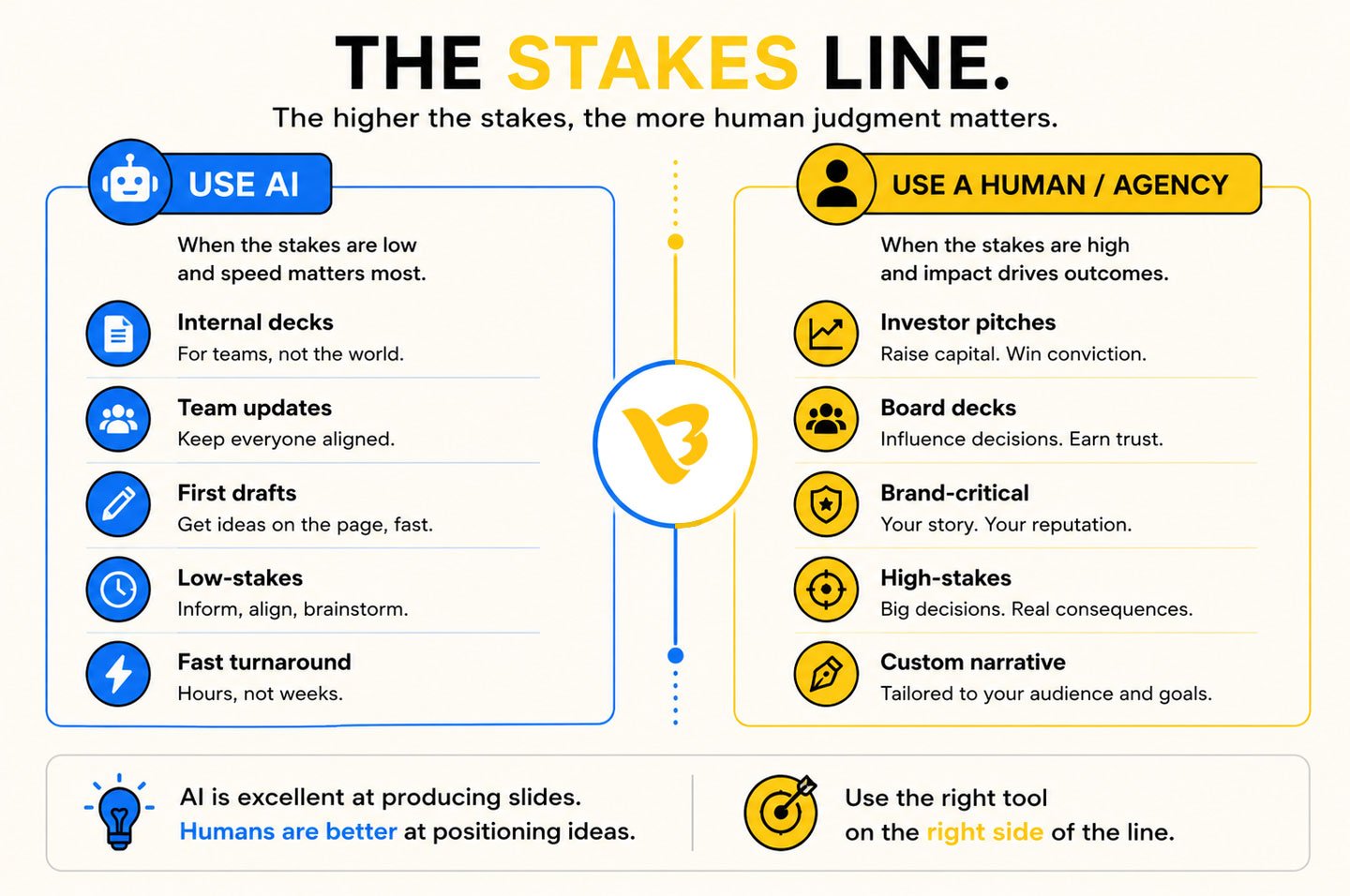
🔸 The output is generic — by design. AI generates from patterns, so it produces what’s average. For internal work, fine. For a deck that needs to feel like you and stand apart from the last ten decks an investor saw, “average” is a liability. Users consistently report AI decks start to feel samey after a few uses.
🔸 It doesn’t understand stakes. AI trained largely on general content optimises for looking complete, not for closing a round or winning a board. It can’t tell the difference between a slide that informs and a slide that persuades — because persuasion is judgement, not layout.
🔸 The narrative is shallow. AI gives you a structure, not a strategy. It won’t know that your weakest slide is the one you’re most attached to, or that your whole pitch should be reordered around the traction nobody’s noticed. That reordering is usually what wins the deal — and it’s exactly what AI can’t do.
🔸 Visuals are hit-or-miss on anything specific. Generic topics (teamwork, growth) get decent images. Your actual product, your niche industry, your specific data story? Expect to replace a third to half of the generated visuals. The further from generic, the worse it gets.
🔸 Polish and reliability break at the top end. Export issues, formatting that flattens, watermarks on free tiers that undermine credibility in front of investors. The closer the stakes get to “this must be perfect,” the more the cracks show. 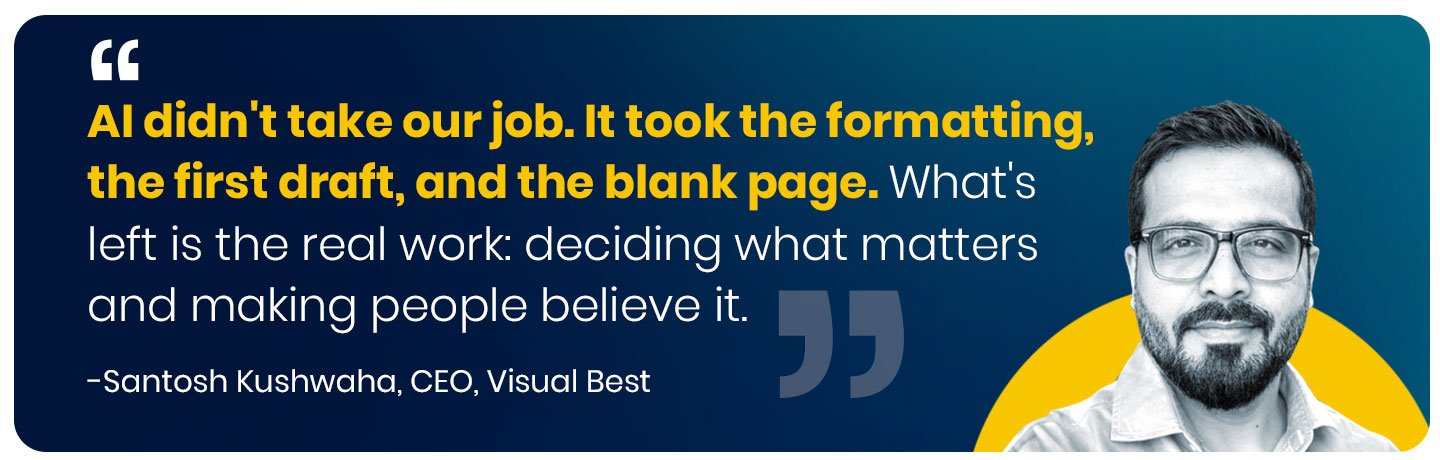
So where’s the line?
Strip it all down and the deciding factor isn’t budget or taste. It’s stakes plus distinctiveness.
Ask two questions about your deck:
- What happens if this deck is merely average? If the answer is “nothing much” — it’s internal, informational, low-stakes — use AI. If the answer is “I lose the round / the deal / the board” — average is the one thing you can’t afford, and average is exactly what AI delivers.
- Does this need to feel distinctly like us? If brand distinctiveness doesn’t matter (internal, functional), AI is fine. If the deck is the brand impression — investor pitch, client pitch, keynote, anything external and high-stakes — generic output works against you.
If both answers point to low-stakes and generic-is-fine: AI, every time. If either points to high-stakes or must-be-distinctive: a human earns their fee — and increasingly, that human is using AI to move faster, not refusing to.
The real 2026 model: not AI vs agency — AI and agency
Here’s the framing that actually matters. The interesting question stopped being “AI or human” a while ago. The tools and the studios aren’t on opposite sides; the best work in 2026 uses both.
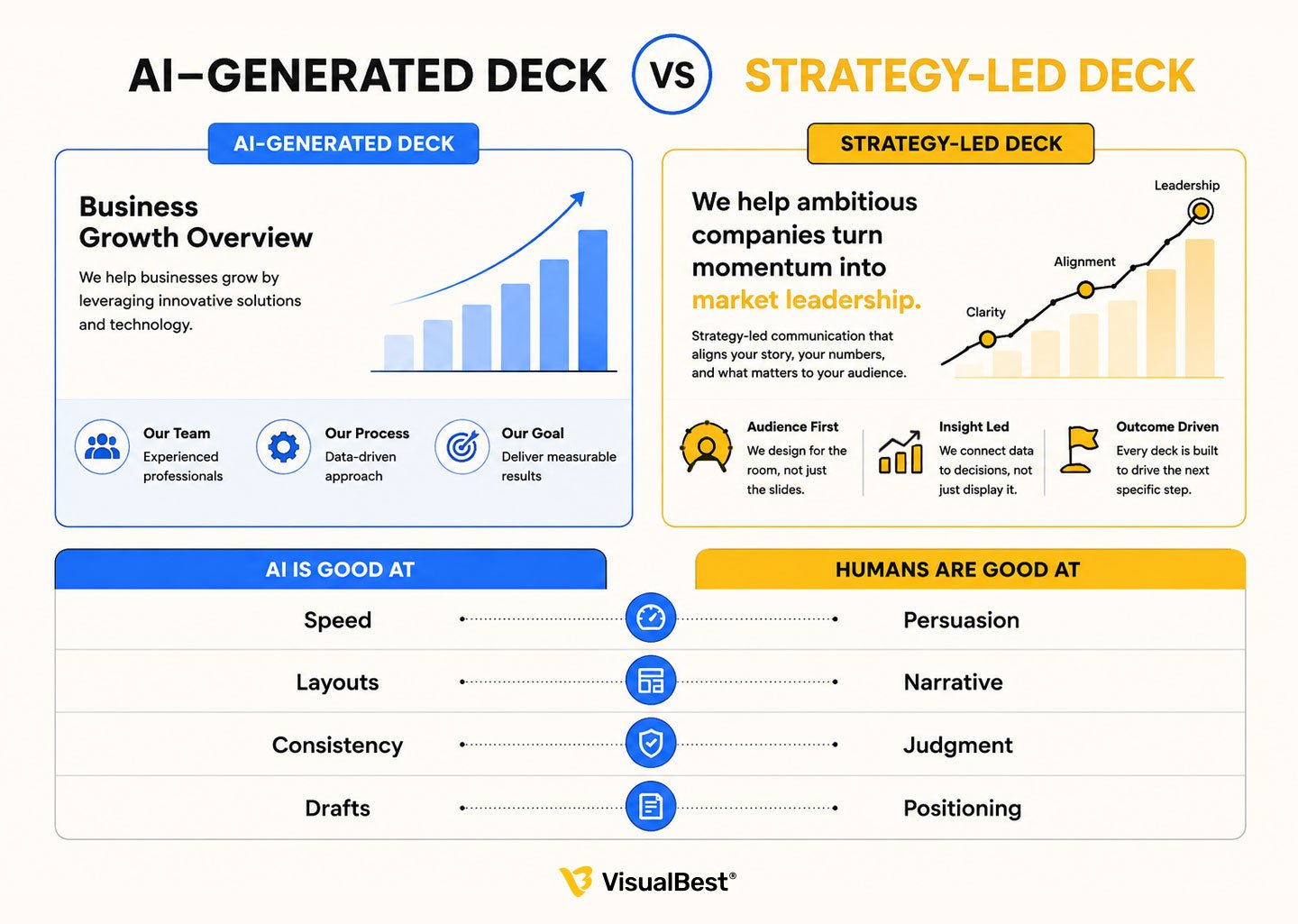
A good agency now uses AI exactly where it’s strong — killing the blank page, drafting structure, accelerating iteration — and spends the saved time where AI is weak: the narrative strategy, the custom data story, the visual identity, the ruthless editing that turns a complete deck into a convincing one. AI lowered the cost of the commodity layer. It raised the premium on the judgment layer.
Which is the same thing we’ve said about design since long before AI: the visual layer is commoditising. The thinking layer isn’t. AI just proved the point faster than we expected.
Frequently asked questions
1. Can AI presentation tools replace a design agency?
For internal, low-stakes, or first-draft decks, yes — comfortably. For investor pitches, client decks, and brand-critical work, no: AI handles layout and structure but not narrative strategy, custom visuals, or high-stakes polish.
2. Is Gamma good enough for an investor pitch deck?
As a first draft, yes. As a finished pitch, rarely — investor decks need accurate data, a unique visual identity, and persuasive narrative that AI generation alone doesn’t provide. Use it to start, then refine.
3. What are AI presentation tools actually best at?
Speed and structure — turning a prompt into a usable draft in under a minute, plus internal decks, team updates, and educational content where the job is to inform, not persuade.
4. Why do AI-generated decks look generic?
Because AI generates from common patterns, so it produces what’s average. That’s fine for internal work but a liability when a deck needs to stand out or feel distinctly like your brand.
5. Do design agencies use AI themselves?
The good ones do — for first drafts, structure, and faster iteration. That frees their time for the parts AI can’t do: strategy, custom visuals, and editing for persuasion.
6. How do I decide between AI and an agency for my deck?
Ask what happens if the deck is merely average. If “nothing much,” use AI. If “I lose the deal,” hire a human — the stakes justify the fee.
Related reading
- Best Corporate Presentation Design Examples in 2026 — what “distinctive, high-stakes” actually looks like.
- Presentation Design Cost in India (2026 Guide) — what the human layer costs, and when it’s worth it.
- Corporate Presentation Design in 2026: What to Adopt, Avoid, and Retire — including how to use AI without your deck looking AI-made.