Explainer videos , Strategy , Trends
Corporate Explainer Video Trends 2026: What to Adopt, What to Adapt, and What’s Already Outdated
Most “2026 video trends” lists are written by studios who want to sell you that trend. They tell you what’s new. They never tell you what’s over — because “stop spending on this” doesn’t come with an invoice attached.
But for a corporate team planning this year’s video work, knowing what to retire matters more than knowing what to chase. The animation style that looked premium in 2023 is the one quietly dating your brand today. The cinematic corporate film you’re about to commission may be exactly wrong for the audience watching on a phone. The trend you rushed to adopt last year is increasingly the one your audience is tired of.
This post gives you a verdict — adopt, adapt, or avoid — on each major 2026 explainer video trend, across every format: animated, live-action, AI-assisted, stock-driven, hybrid, corporate film, and beyond. Because that’s the real 2026 story: explainer video is no longer one format. It’s a strategic choice between several, and the trends in each move differently.
First, a frame worth getting right
“Explainer video” doesn’t mean animated. It means any video whose job is to explain a product, service, or story clearly. That includes:
- Animated explainers — 2D, 3D, motion graphics, whiteboard
- Live-action and corporate films — founders, customers, teams, locations
- AI-generated and AI-assisted videos
- Stock-footage-driven videos where editing and narrative carry the work
- Product demos and screen-recordings
- Testimonial and case-study videos
- Hybrid formats — live + animation, stock + motion graphics
The 2026 question isn’t “should we make an explainer video.” It’s “which format does this specific story need.” Most of this guide applies across formats; where it’s format-specific, we’ll say so.
What’s already outdated (across every format)
Start here, because nobody publishes this part. These choices no longer read as “current” in 2026 — across animated and live-action — even though several were standard practice eighteen months ago.
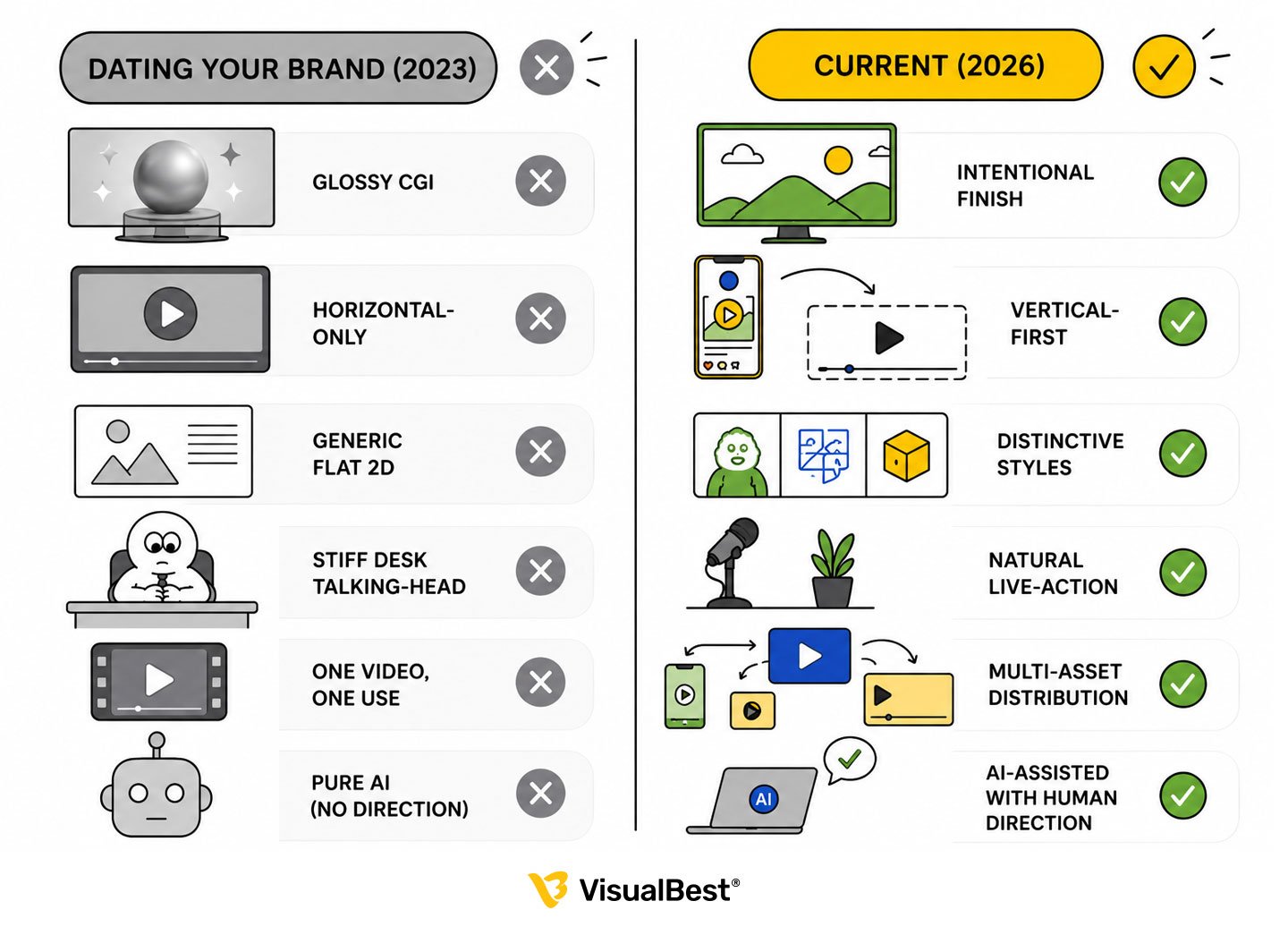
🔸 The hyper-polished corporate look. Whether it’s glossy CGI or over-lit, over-graded corporate film, audiences are visibly tired of the perfectly-produced look that has no soul. Pure polish without personality now reads as forgettable. The current move is intentionality — production that feels considered, not just expensive.
🔸 Horizontal-only thinking. Producing one 16:9 video and calling it done. The 2026 default is vertical-first, then adapted horizontally — because more of your audience watches on a phone than a projector. Applies equally to animation, live-action, and product video.
🔸 Generic flat 2D animation. The same generic flat corporate-animation style that every B2B explainer used between 2018 and 2024. It now reads less as “professional” and more as “couldn’t be bothered to look distinct.”
🔸 Stiff scripted live-action with a presenter behind a desk. The talking-head corporate format isn’t dead — but the stiff, formal version of it is. Audiences now expect live-action to feel real, not staged.
🔸 One video, one use. Producing a single video for a single placement is wildly inefficient in 2026. The expectation is one production yielding 6–8 platform-specific assets — hero plus social cut-downs, vertical and horizontal variants.
🔸 AI-generated videos with no human direction. Cheap AI video output is everywhere now, and audiences can smell it. Generic AI visuals without strategic oversight increasingly cost credibility rather than save budget.
Cross-format trends — apply across every video type
These trends matter regardless of whether you’re producing animation, live-action, hybrid, or AI. Address them first.
Vertical-first production — ADOPT
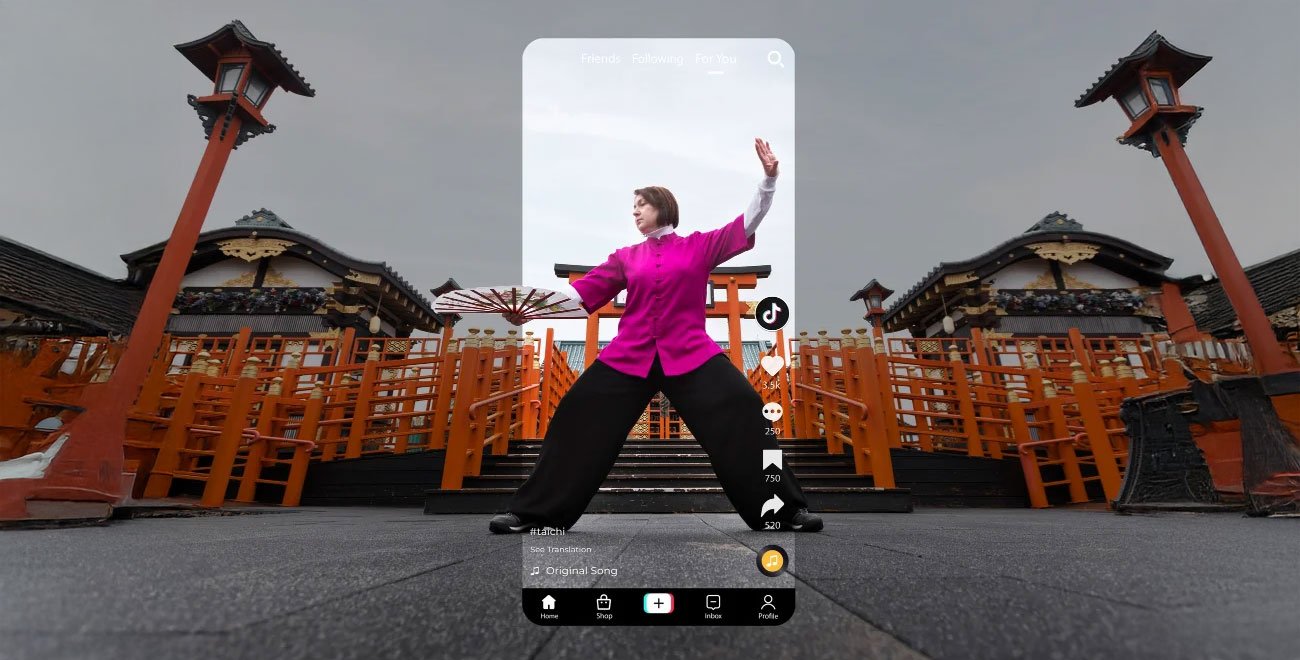
Vertical (9:16) is no longer the social variant of your “real” video. It’s increasingly the starting format, with horizontal adapted from it. Applies to animated explainers, live-action shoots, product videos, and corporate films alike. Modern platforms reward content that fills the screen, and your buyer’s screen is usually a phone.
The corporate caveat: vertical-first doesn’t mean vertical-only. You still need a 16:9 version for the website, the boardroom, and the sales call. Adopt the production approach — design for vertical, then adapt — without abandoning horizontal.
AI-assisted (not AI-generated) production — ADOPT

Roughly 63% of video marketers now use AI tools in production. Done right, AI handles the parts that used to eat budget — first-draft scripts, background animation, B-roll generation, stock-footage discovery, localisation variants, motion graphics templates — and frees humans to focus on story and finish.
The line that matters: AI-assisted (humans direct, AI accelerates) is the win. AI-generated (the tool decides) is the trap — across every video format. Audiences can tell.
Multi-asset distribution from one production — ADOPT
The strongest 2026 video budgets produce one core asset and extract 6–8 derivatives — 15-second social hooks, 30-second awareness clips, vertical cut-downs, platform-specific edits, GIF and still variants for emails. One production, multi-channel distribution.
This is the single highest-ROI shift in corporate video this year — and it applies regardless of format. If you’re still producing one video per placement, your budget is doing a fraction of the work it could.
Personalised / dynamic video — ADAPT
AI now enables videos that change content — examples, visuals, CTAs — based on viewer industry, role, or behaviour. A SaaS prospect sees SaaS examples; a healthcare prospect sees healthcare ones. Reported conversion lifts vs. one-size-fits-all sit in the 30–50% range.
The corporate caveat — why adapt, not adopt yet: the tech is real and the lift is real, but production complexity (multiple variants, dynamic logic, data integration) is heavy. Worth it for high-volume B2B sales motions; overkill for a homepage hero. Easier in animation and stock-driven formats than in live-action.
Format-specific trends — what’s moving in each lane
The cross-format shifts above apply to everything. These move differently depending on whether you’re producing animation, live-action, or hybrid.
Animated explainers — hand-crafted, “imperfect-feeling” styles — ADOPT
After years of flat, glossy uniformity, the 2026 corporate audience is responding to intentionality in animation — textures that feel like paper or clay, movement with personality, animation that looks human-touched even when it’s digital.
For corporate brands this is a credibility play, not just an aesthetic one. Hand-crafted-feeling animation reads as “they cared.” Stock 2D doesn’t. Especially strong for brand films, founder stories, and category-defining product videos.
Live-action / corporate film — cinematic and natural — ADAPT
Corporate live-action is moving in two directions at once: more cinematic in finish (better lighting, considered composition, restrained motion, premium pacing) and more natural in performance (less scripted, more conversational, real people not actors).
The corporate caveat: match the production tier to the stakes. Cinematic is right for brand films, launches, leadership content, customer hero stories. It’s wrong for training videos and internal updates — over-producing those signals confusion about what the video is for.
3D and motion graphics — premium and selective — ADAPT
3D explainers and advanced motion graphics produce some of the most striking corporate video work in 2026 — but they remain a premium tier. They’re strongest for product visualisation, complex processes, and brand statements where the production quality is the message.
The corporate caveat: 3D is one of the easier places to overspend without clear ROI. Adopt where the product genuinely benefits from spatial visualisation (industrial products, hardware, complex SaaS interfaces). Skip where 2D or live-action would tell the story just as well for a fraction of the cost.

Stock-footage-driven explainers — narrative-led editing — ADAPT
Stock footage is no longer the cheap-out option it used to be. The 2026 standard is strong narrative editing over carefully chosen footage — letting story carry the work where custom production isn’t justified. AI tools now also generate custom “stock-like” footage, narrowing the gap with traditional stock libraries.
The corporate caveat: stock-driven works when the story is genuinely universal (thought leadership, category education). It fails when your product, team, or workplace is the point — generic footage actively undermines specificity. Adapt for high-volume content; avoid for hero brand pieces.
Hybrid (live + animation) — ADOPT
Mixing live-action with animation and motion graphics — for data overlays, screen flows, illustrative sequences, or character-driven storytelling intercut with real footage — is one of the most consistently effective formats for corporate explainer work in 2026. Audiences trust the live parts and retain the animated parts.
The format is particularly strong for product explainers, customer story videos, and any explanation that mixes “who we are” (real) with “how it works” (animated).
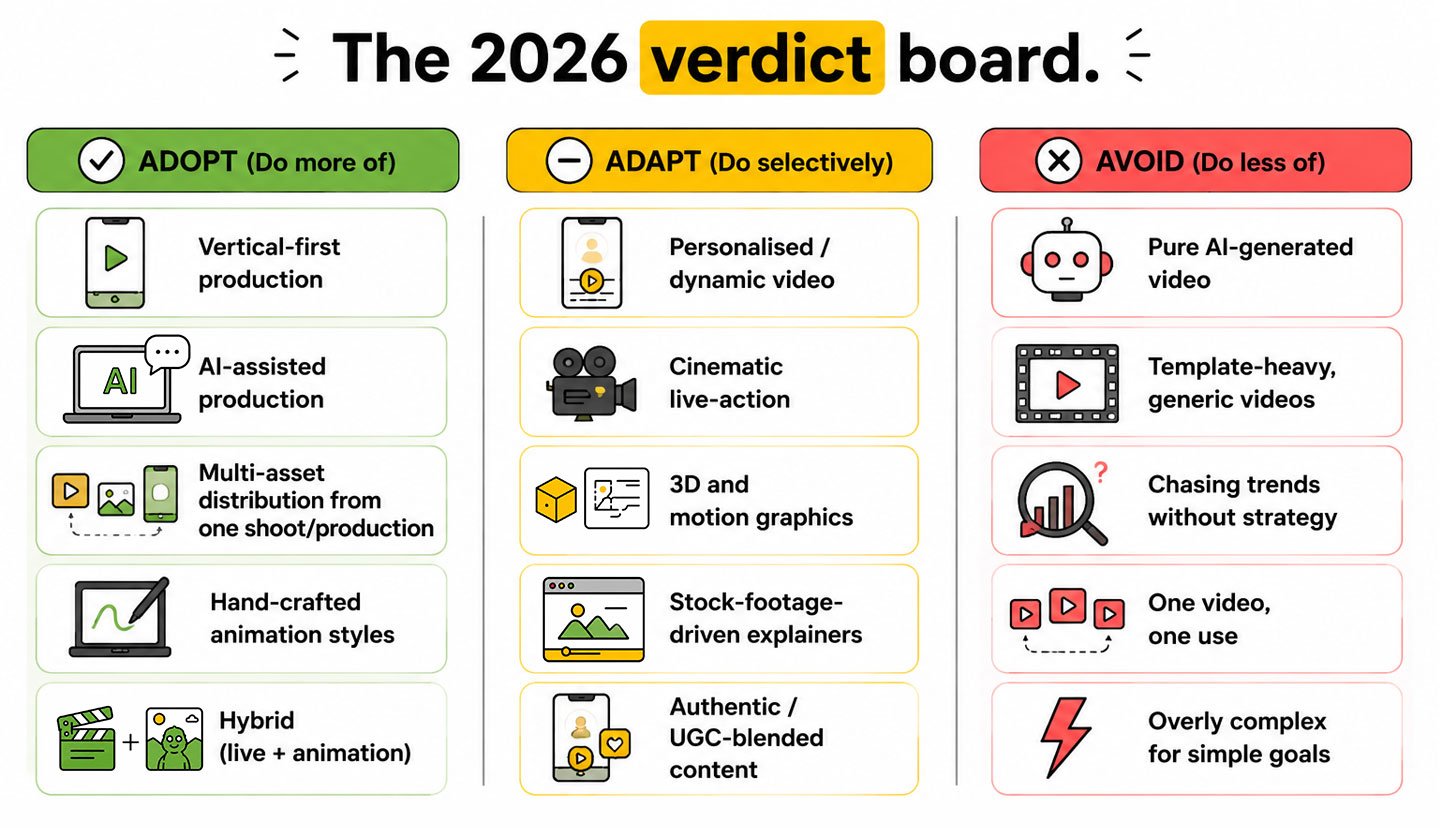
Authentic / UGC-style content — ADAPT
A growing 2026 look mixes polished production with rougher, authentic-feeling user, customer, or founder footage. The combination outperforms pure-polish because audiences trust the rough bits and retain the polished bits.
The corporate caveat: the UGC component has to be real — actual customers, actual founders, actual workplaces. Staged “authenticity” is worse than no authenticity at all. Adapt if you have access to real footage; skip if you’d have to fake it.
Pure AI-generated video — AVOID (for now)
The one clear “avoid” for serious corporate use, across every format conversation. Pure AI video — generated from a prompt, no human direction — is improving fast, but in 2026 it still tells: generic visuals, formulaic pacing, an absence of strategic judgment, occasional uncanny-valley moments in faces and hands. For a corporate brand making a first impression, that gap shows up exactly where you can’t afford it.
Use AI as an accelerant across animation, B-roll, and post-production. Don’t yet let it be the author of the final piece.

The filter that matters more than any trend
Every trend on this list is useless until it passes one test: does it serve the specific story you’re telling, for the specific audience you’re telling it to?
A hand-crafted animation style is right for a brand explainer and wrong for a regulatory training video. A cinematic live-action film is right for a leadership story and wrong for a product update. Stock-driven editing is right for thought leadership and wrong for hero brand work. 3D is right for hardware and wrong for SaaS.
Before adopting anything from this list, three questions:
🔸 Story: which format does this specific story actually need?
🔸 Audience: does this serve them better, or just impress us more?
🔸 Stakes: does the moment justify the production cost?
Fail any one, and the trend is wrong for that project — no matter how popular.

Frequently asked questions
1. What’s the biggest corporate video trend in 2026?
Vertical-first production across every format — animation, live-action, product video. Most corporate audiences now consume on phones, so designing for vertical and adapting horizontally is the year’s defining shift.
2. Is animation or live-action better for corporate explainer videos in 2026?
Neither universally — match the format to the story. Animation wins for abstract concepts, processes, and product visualisation. Live-action wins for trust, founders, customers, and brand emotion. Hybrid (both combined) is often the strongest for product explainers.
3. Should corporate brands use AI to make explainer videos in 2026?
Yes — for production assistance (scripts, B-roll, stock-footage discovery, animation acceleration). No — as a pure replacement for human direction. AI-assisted wins; AI-generated still tells.
4. How long should a 2026 corporate explainer video be?
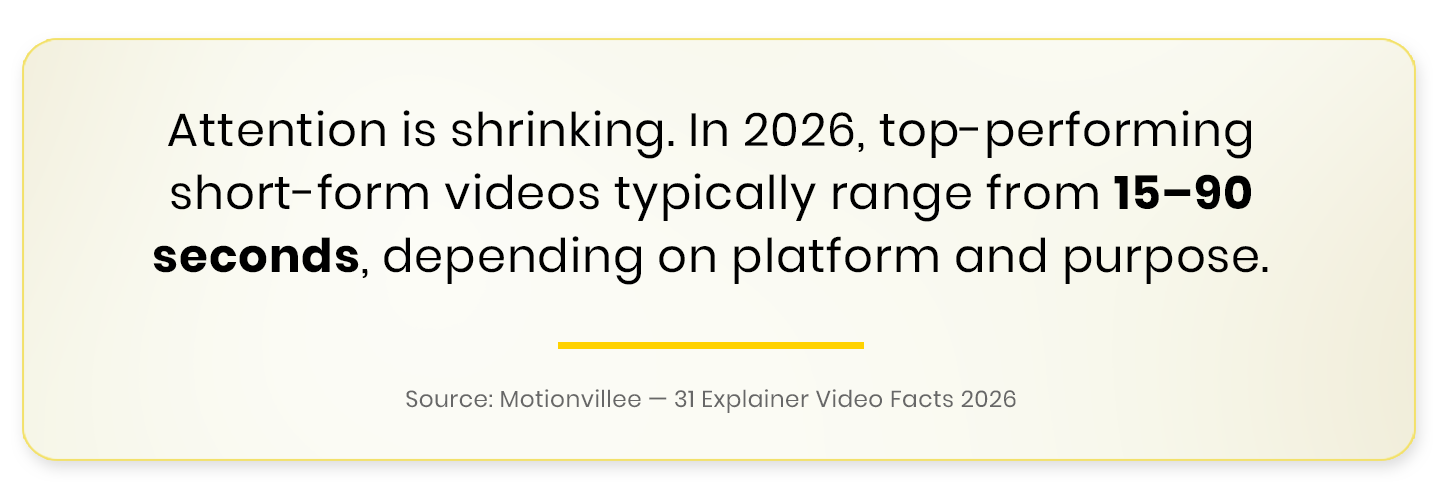
Hero versions stay at 60–90 seconds. Social cut-downs should be 15–45 seconds. Best practice is producing one core video and extracting 6–8 platform-specific shorter variants.
5. Are 3D explainer videos worth the cost?
For hardware, industrial products, and complex spatial concepts — yes. For most SaaS, services, and B2B value-prop videos, 2D animation or live-action delivers the same outcome for less. Match production tier to the stakes.
6. What video styles are outdated in 2026?
The hyper-polished CGI corporate look, generic flat 2D animation, stiff scripted talking-heads, horizontal-only delivery, and pure AI-generated output without human direction.
7. Should we choose a video studio that specialises in one format or one that produces all formats?
Depends on your needs. If you need one specific format consistently, a specialist is fine. If your video needs vary (sometimes animation, sometimes live-action, sometimes hybrid), a multi-format studio gives you strategic flexibility — and saves you onboarding a new vendor each time the format changes.
Related reading
- 📖 When Should a Company Use an Explainer Video Instead of a Presentation? — make sure video is even the right format first.
- 📖 7 Mistakes Companies Make in Corporate Explainer Videos — the timeless errors that no trend will fix.
- 📖 Can AI Presentation Tools Replace a Design Agency in 2026? — the AI-vs-human question, applied to the deck side of the house.