Graphic Design , Marketing Design
10 Marketing Design Mistakes B2B Companies Make (and How to Fix Each) in 2026
I audit a lot of marketing design in my job. Over the last six months, I’ve reviewed decks, brochures, landing pages, social carousels, sales enablement kits, and campaign systems from more than forty B2B companies. Different industries. Different budgets. Different team sizes.
The same ten mistakes keep showing up.
Some are obvious. A sales deck that uses six different fonts. A brochure where the primary CTA is buried on page nine. Others are harder to spot but cost more. A beautifully designed campaign landing page where the actual data chart is unreadable at mobile widths. A brand system that looks consistent on the website but completely fragments by the time it reaches a sales rep’s presentation.
This isn’t a trend list. These are the ten mistakes B2B marketing teams keep making in 2026, why they happen, what they actually cost, and the practical fix for each.
If you recognize your team in a few of these, you’re not alone. Fixing even three of them this quarter will outperform most of the design trends being pushed this year.
Mistake 1: Starting the design before the strategy is clear
What this looks like
Someone on the team opens Figma. Or hands a designer a brief that reads “need a landing page for the new campaign.” Design starts. Two weeks in, someone realizes the campaign’s primary audience isn’t who the team originally thought. Messaging shifts. The design gets reworked. Then shifts again. The project ships late, over budget, and still doesn’t quite land.
Why it happens
Marketing teams are under pressure to show motion. Starting the design feels like progress. Clarifying the strategy feels like a meeting that doesn’t produce an artifact. So teams default to the artifact.
What it costs
The visible cost is rework hours and timeline slips. The invisible cost is bigger. A design built on unclear strategy almost always compromises on both. You end up with work that’s visually competent but strategically muddy. Buyers don’t articulate what’s wrong, but they don’t convert either.
The fix
Before any design work starts, answer three questions in writing: who is the primary audience, what do we want them to think or do, and what proof points earn that belief. One page. If you can’t answer those three clearly, you don’t have a design problem. You have a strategy problem. Fix that first.
A good brief doesn’t guarantee good design. But a bad brief guarantees design that misses.
Mistake 2: Treating all marketing assets as equal priority
What this looks like
The quarterly social carousel gets the same design process, timeline, and team review as the flagship campaign landing page. The one-pager for a small industry event gets more hours than the sales deck that will walk into every enterprise meeting next quarter.
Why it happens
Marketing teams are busy. The default is to treat every request as a new ticket in a queue, with similar scoping and effort. Design agencies and freelancers often reinforce this because flat-rate pricing is easier to quote than tiered pricing.
What it costs
High-stakes assets get under-invested. Low-stakes assets get over-invested. The design budget ends up spread thin across everything, meaning nothing gets the attention it deserves. The flagship work doesn’t stand out. The daily output does.
The fix
Classify every marketing design request before it hits the queue. Three tiers works:
- Tier A — Brand-defining or revenue-critical: Flagship campaign landing pages, enterprise sales decks, annual reports, investor presentations. These justify senior creative direction and premium design investment.
- Tier B — Important but routine: Monthly campaign assets, standard sales collateral, event materials. These justify good design but can run on a mid-tier process.
- Tier C — High-volume operational: Social posts, internal decks, daily content. These justify templated systems with light customization.
Mismatched tier is the single biggest reason marketing design budgets feel inefficient.
Mistake 3: Hiring the wrong tier of talent for the work
What this looks like
A ₹30,000 freelancer gets assigned to design the annual report that will go to 500 institutional investors. Separately, a ₹1.5 lakh agency gets booked for a social media post that could have been done with a template in-house.
Why it happens
Procurement often buys design the same way it buys stationery: lowest cost per unit. Marketing teams rarely push back because they don’t have a framework for which work justifies which tier.
What it costs
Brand-defining work ends up looking generic. Routine work ends up over-paid for. The flagship assets that should carry the brand further than any single person’s effort get produced at freelancer quality. Meanwhile the daily output eats into budgets that should fund the flagship work.
The fix
Match the talent tier to the asset tier from Mistake 2.
- Tier A work: specialist agencies or senior freelancers with proven premium-category portfolios. Expect ₹2 to ₹8 lakh depending on scope.
- Tier B work: mid-tier studios or experienced solo designers with retainer arrangements. ₹50,000 to ₹1.5 lakh monthly for sustained output.
- Tier C work: in-house juniors, template systems, or specialist high-volume vendors. ₹15,000 to ₹40,000 monthly.
Full pricing benchmarks across every marketing design format are in our Marketing Design Cost in India 2026 guide.
Getting the tier ratio right shifts the economics. Teams that get this right spend less overall and ship better flagship work.
Mistake 4: Relying on templates instead of a system
What this looks like
Every new asset starts from a slightly modified version of the last asset. Brand elements drift over months. Fonts creep in. Colors slide. The team doesn’t notice until a prospect’s deck arrives looking nothing like the website that convinced them to take the call.
Why it happens
Templates are faster to adopt than systems. Everyone knows how to copy a Google Slides deck. Setting up a brand system with components, tokens, and governance takes months and discipline.
What it costs
Templates break down the moment you need something the template didn’t anticipate. A system scales. Over 18 months, template-driven teams end up with assets that look like they came from different companies. Brand recognition erodes. Sales enablement weakens. Every new designer or vendor has to be re-briefed from scratch.
The fix
Build a proper brand system, not a template kit. The difference:
- A template kit is “here are five slide layouts, use these.”
- A system is “here are the components, tokens, type scale, color roles, grid rules, and content patterns to build any slide for any situation.”
Investment in a system pays back within two campaigns. Templates feel efficient for one quarter and inefficient for every quarter after.
If building a full system feels out of reach, start with the three most-used asset types (deck, one-pager, social post) and build components for those first. Expand from there.
Mistake 5: Inconsistent execution across formats
What this looks like
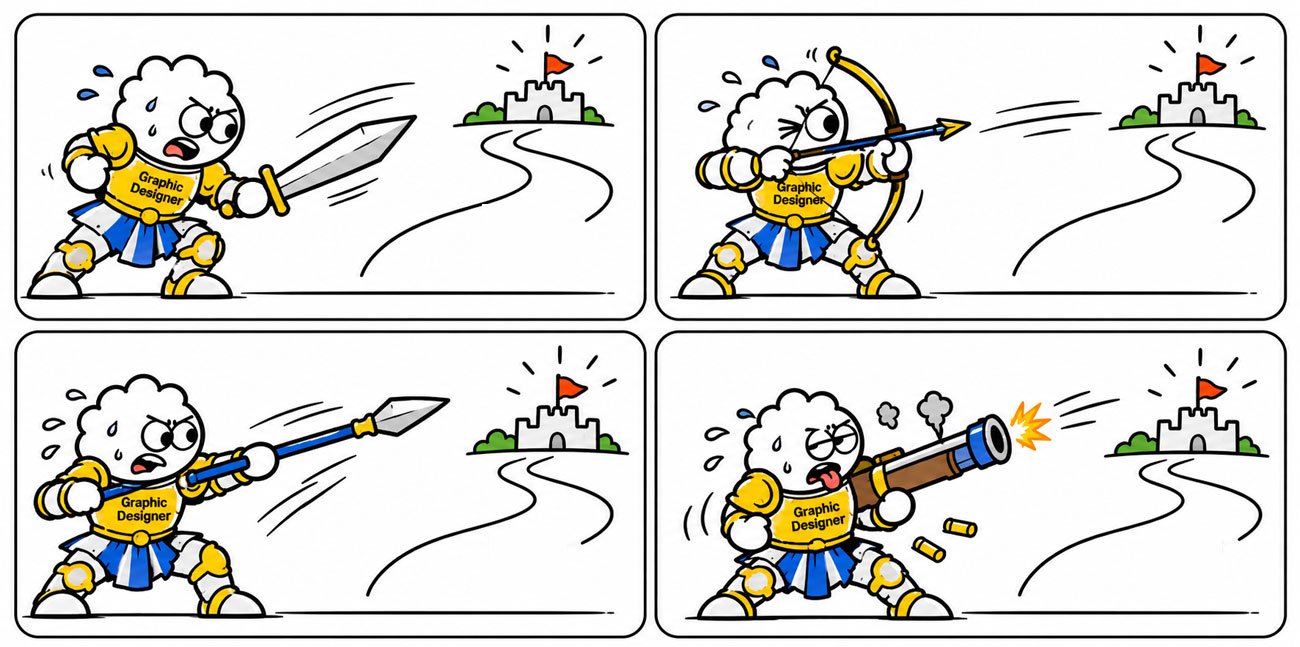
The website is beautifully designed. The brochure feels different. The sales deck feels different again. The LinkedIn posts could belong to a different company entirely. Each asset was designed by someone different, at a different time, without a shared reference beyond the logo.
Why it happens
Different vendors. Different internal teams. Different briefs. No single owner enforcing consistency across formats. Marketing teams often treat each format as its own project rather than as expressions of one brand.
What it costs
Buyers see the brand at every touchpoint. When the touchpoints don’t align, buyers don’t articulate what’s wrong, but they trust the brand less. In enterprise sales cycles that take six to nine months and involve twenty touchpoints, consistency is the compound-interest version of brand building. Inconsistency is its negative version.
The fix
Appoint one creative owner responsible for cross-format consistency. This can be an internal design lead or a creative partner at your lead design agency. Their job is not to design everything. Their job is to review every outbound asset against the brand system before it ships.
A fifteen-minute weekly review beats three months of brand audits.

Mistake 6: Over-designing hero visuals, under-designing the data
What this looks like
A B2B sales deck opens with a stunning hero image. Three slides later, there’s a chart showing the ROI calculation. The chart is a stock bar graph in default Excel styling, with axis labels in 8-point font, no visual hierarchy, no story arc.
Why it happens
Hero visuals get design attention because they’re visible, impressive, and easy to specify. Data visualizations get neglected because they feel like a different discipline, require subject-matter understanding, and are harder to design from a brief.
What it costs
In B2B, the data is the argument. The hero visual sets the mood. If the mood is set but the argument isn’t delivered, the deck fails. Buyers remember charts more than hero images because charts are what they take back to their internal decision meetings.
The fix
Give data visualization the same design investment you give hero visuals. For every chart, ask:
- What’s the single point this chart needs to make?
- Can a viewer read that point in three seconds?
- Does the chart’s visual weight match the point’s importance?
- Is the font size readable at the actual viewing distance?
If any answer is no, redesign the chart. In B2B marketing design, excellent data visualization outperforms excellent photography almost every time.
Mistake 7: Chasing design trends that don’t suit B2B buyers
What this looks like
The 2026 design trends include brutalist typography, acid gradients, 3D maximalism, and anti-design movements. The marketing team sees these in design annuals and asks the agency to incorporate them into the enterprise sales deck going to a global pharmaceutical procurement team.
Why it happens
Marketers want to look current and innovative. Agencies often reinforce trend chasing because new aesthetics are easier to pitch than disciplined execution of fundamentals. Internal stakeholders mistake trend-signaling for strategic design thinking.
What it costs
B2B buyers in 2026 aren’t deciding between vendors based on who’s most on-trend visually. They’re deciding based on who looks credible, serious, and competent to deliver the work. A pharmaceutical procurement team evaluating a vendor doesn’t want brutalist typography. They want clear information architecture.
The fix
Judge every design decision by one question: does this help the primary buyer trust us, understand us, and choose us?
B2B design should feel contemporary without feeling trendy. Clean typography. Clear information hierarchy. Confident use of white space. Thoughtful color. These age well. Most 2026 trends age like 2022 crypto-aesthetic campaign branding.
Save trend experimentation for low-stakes campaigns. Protect flagship work from fashion.
Mistake 8: Involving design too late in the campaign process
What this looks like
Marketing strategy is set in month one. Copy is finalized in month two. In month three, the design team gets the brief: “we need this styled by next Friday.” The designer, who could have shaped the campaign’s visual story from the beginning, becomes a decorator at the end.
Why it happens
Teams default to a linear process: strategy, then copy, then design. It feels efficient. But it treats design as the dressing on an already-cooked meal, not as a core ingredient.
What it costs
The campaign ships with design that executes the brief but doesn’t elevate it. Big creative possibilities that would have required early collaboration never get surfaced. The design team’s expertise about visual storytelling, buyer attention, and campaign cohesion arrives too late to shape outcomes.
The fix
Involve the design lead in strategy sessions, not just execution briefings. The design question isn’t just “how will this look?” It’s “what visual story will carry this strategy best?”
For every major campaign, schedule a design-strategy session before the copy is written. One hour. Design hears the strategy. Strategy hears what visual possibilities exist. Copy that comes out of that conversation is already shaped by design thinking.
This single change compounds across years.
Mistake 9: Measuring marketing design by output volume, not business outcome
What this looks like
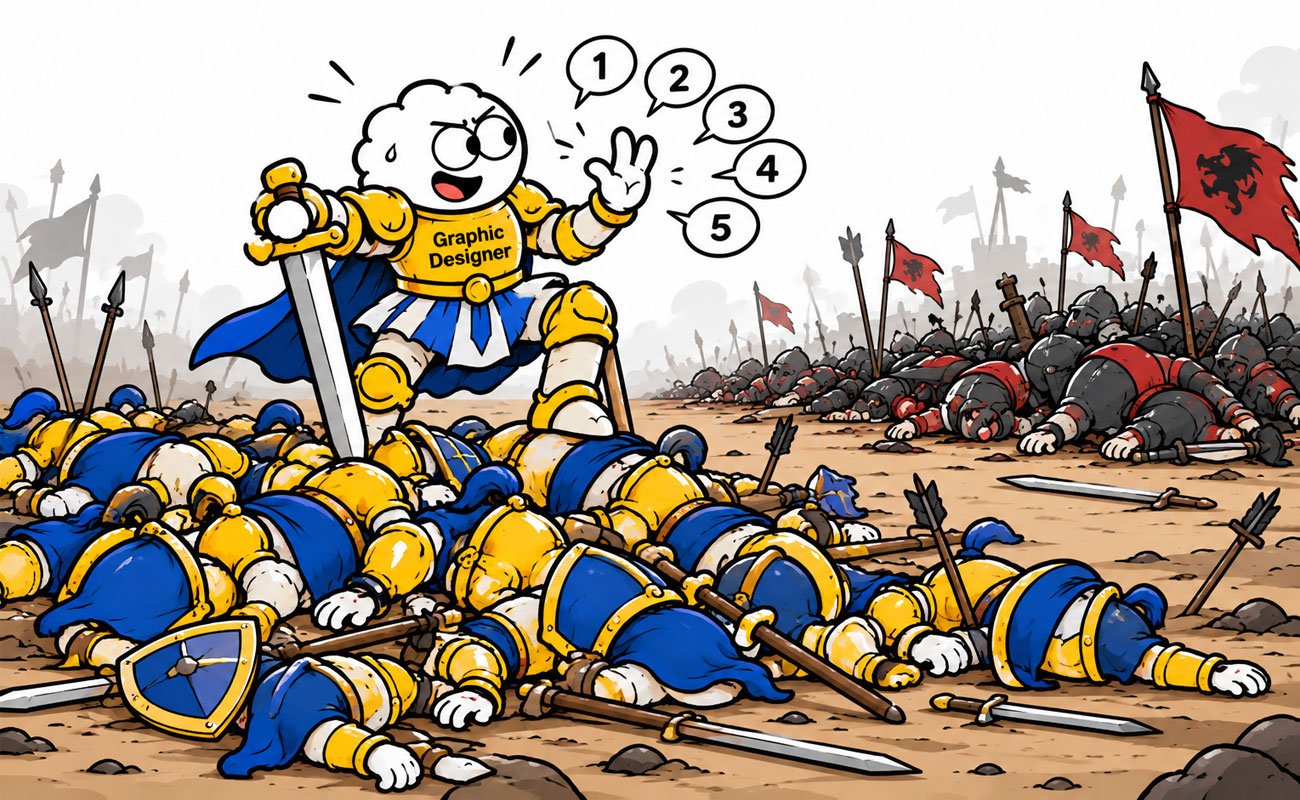
The quarterly review shows “the design team shipped 347 assets this quarter, up 22% year on year.” Nobody asks which assets converted. Which campaigns moved pipeline. Which decks closed deals. Which brochures prospects actually read.
Why it happens
Volume is easy to measure. Business outcomes attributed to design are harder. Marketing dashboards default to what’s countable, not what’s meaningful.
What it costs
Teams start optimizing for the metric. More assets. Faster turnaround. Smaller individual investments spread across more projects. Over time, design becomes a volume-production function, not a business impact function. The flagship work that would have driven the biggest results gets sacrificed to feed the volume number.
The fix
Track at least one outcome metric per design tier.
- Tier A outcomes: Campaign conversion rate, deal win rate when flagship asset was used, buyer feedback quality
- Tier B outcomes: Asset engagement rate, sales team usage frequency, time saved by designers
- Tier C outcomes: Production efficiency, template reuse rate, cost per output
Volume is a diagnostic metric. Outcomes are the real metric. Measure both, but reward teams on outcomes.
Mistake 10: No feedback loop between design and sales
What this looks like
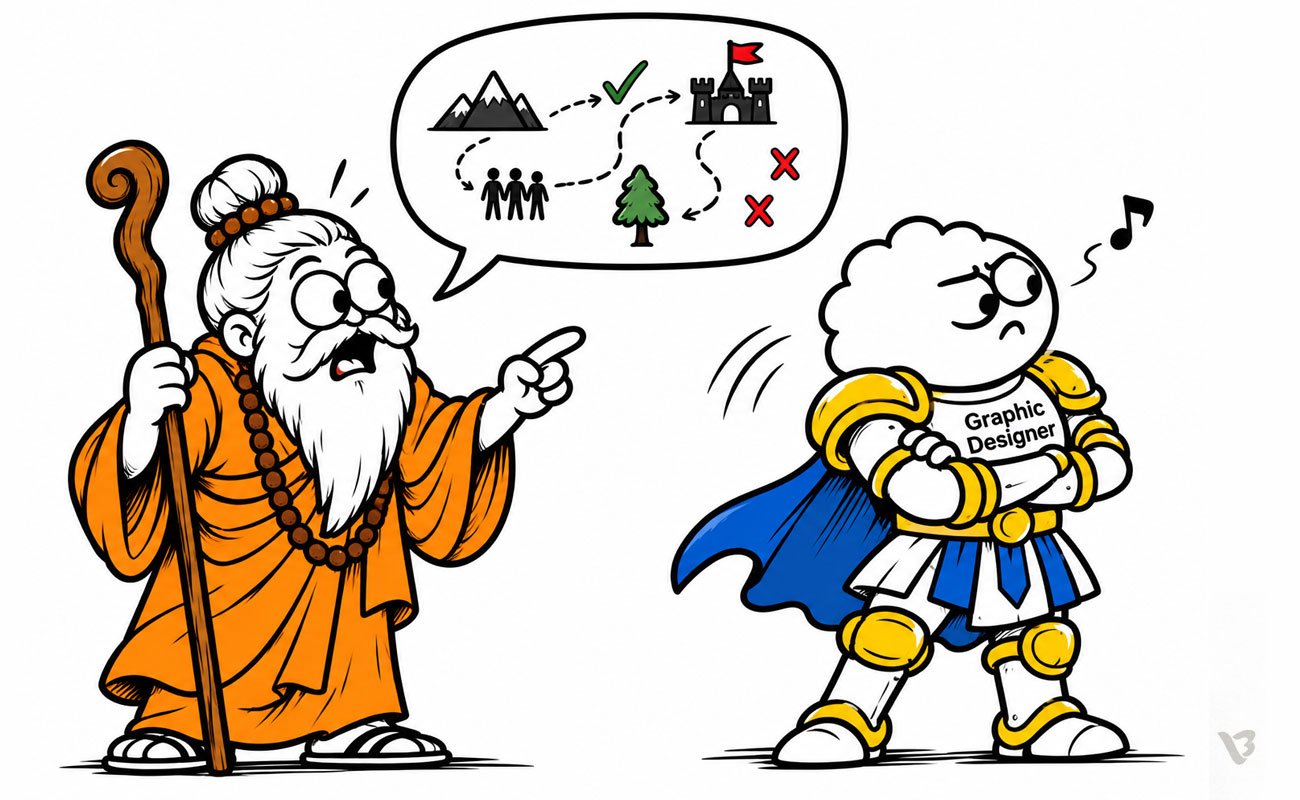
The design team ships a new sales deck. Sales uses it (or doesn’t). No feedback flows back to design about which slides land, which get skipped, which prospects asked questions about, which they ignored. The next deck revision is based on the design team’s guesses about what to improve.
Why it happens
Design and sales teams often don’t share meetings, platforms, or metrics. Design hands off assets. Sales uses them. There’s no structured way for the information to flow back.
What it costs
Design keeps improving against the wrong signals. Sales keeps asking for small customizations because the base deck isn’t optimized for actual sales conversations. Over time, every rep builds their own version. Brand consistency erodes. Design investment compounds into waste.
The fix
Build a structured monthly feedback loop between design and sales teams. Thirty minutes. Three questions:
- Which assets did you use most this month?
- Which slides or sections did prospects respond to?
- What’s missing from your current kit?
Design uses this to prioritize the next revision cycle. Sales feels heard. The deck improves against real conversations, not design-team guesses.
This feedback loop is more important than almost any design upgrade.
How to fix all ten mistakes at once
If this list feels overwhelming, you don’t need to tackle everything at once. The ten mistakes cluster into three underlying problems:
Problem 1: No strategic framework for design decisions (Mistakes 1, 2, 3, 7)
Fix: Build a tiered classification system for marketing assets. Match investment and vendor tier to asset tier. Protect flagship work from under-investment and routine work from over-investment.
Problem 2: No shared system across formats and teams (Mistakes 4, 5, 8)
Fix: Build a proper brand system (not a template kit). Appoint one creative owner for cross-format consistency. Involve design in strategy, not just execution.
Problem 3: No feedback loop between design and business outcomes (Mistakes 6, 9, 10)
Fix: Measure design by outcome, not volume. Design data visualizations with the same discipline as hero visuals. Build structured feedback loops with sales teams.
Fix one cluster per quarter. In three quarters, your marketing design operation looks fundamentally different.
When to involve a creative partner (and when not to)
Some of these fixes are internal. A design-sales feedback loop doesn’t need an agency. A classification system can be built with a few meetings.
Others benefit from outside perspective. A proper brand system is hard to build from inside the team that will use it. Senior creative direction on flagship campaigns is hard to buy as a one-off. Audit of existing marketing design across formats is more honest when done by someone with no political stake in the current output.
If you’re building marketing design capability for the first time, external partnership accelerates the learning curve. If you have mature operations and need senior direction on specific projects, project engagement works. If you have ongoing volume at consistent quality, retainer engagement delivers the best economics. Our creative retainer decision guide has the framework for which model fits.
Visual Best has worked with over 250 B2B and enterprise brands on marketing design across all three models. If you want to think through which model fits your situation, we’re happy to talk.

Frequently asked questions
What’s the biggest marketing design mistake B2B companies make in 2026?
Treating all marketing assets as equal priority. Flagship work gets under-invested while routine work gets over-invested, and the overall budget feels inefficient despite being adequate.
How do I know if we’re hiring the wrong tier of design talent?
If your flagship assets look generic and your routine assets feel over-produced, you have tier mismatch. The fix is a classification system matching talent tier to asset tier.
Should we build a brand system or use templates?
Templates are faster to adopt but break down within 18 months. Systems scale. For any company producing marketing design across multiple formats and vendors, a proper system pays back within two campaigns.
How do I measure marketing design ROI?
Track at least one outcome metric per design tier. Flagship assets track against campaign conversion. Routine assets track against engagement and usage. Don’t measure design by output volume alone.
When should design join the campaign process?
At strategy, not execution. Involve design in the campaign strategy meeting. Copy that comes out of that conversation is already shaped by design thinking, and the final work is stronger.
Do we need an agency or can we do this in-house?
Depends on volume and consistency needs. For ongoing high-volume marketing design, an in-house team plus retainer with a specialist agency usually delivers best economics. For specific flagship projects, project engagement with a specialist works. See our Marketing Design Cost in India 2026 guide for the full breakdown.
How much do these mistakes cost in actual rupees?
Hard to measure precisely, but the pattern is consistent: companies with these mistakes typically spend 20 to 40 percent more on marketing design than they need to, while producing flagship work that under-performs by a similar margin.