Explainer videos , Video Production
7 Mistakes Companies Make in Corporate Explainer Videos (and How to Fix Each)
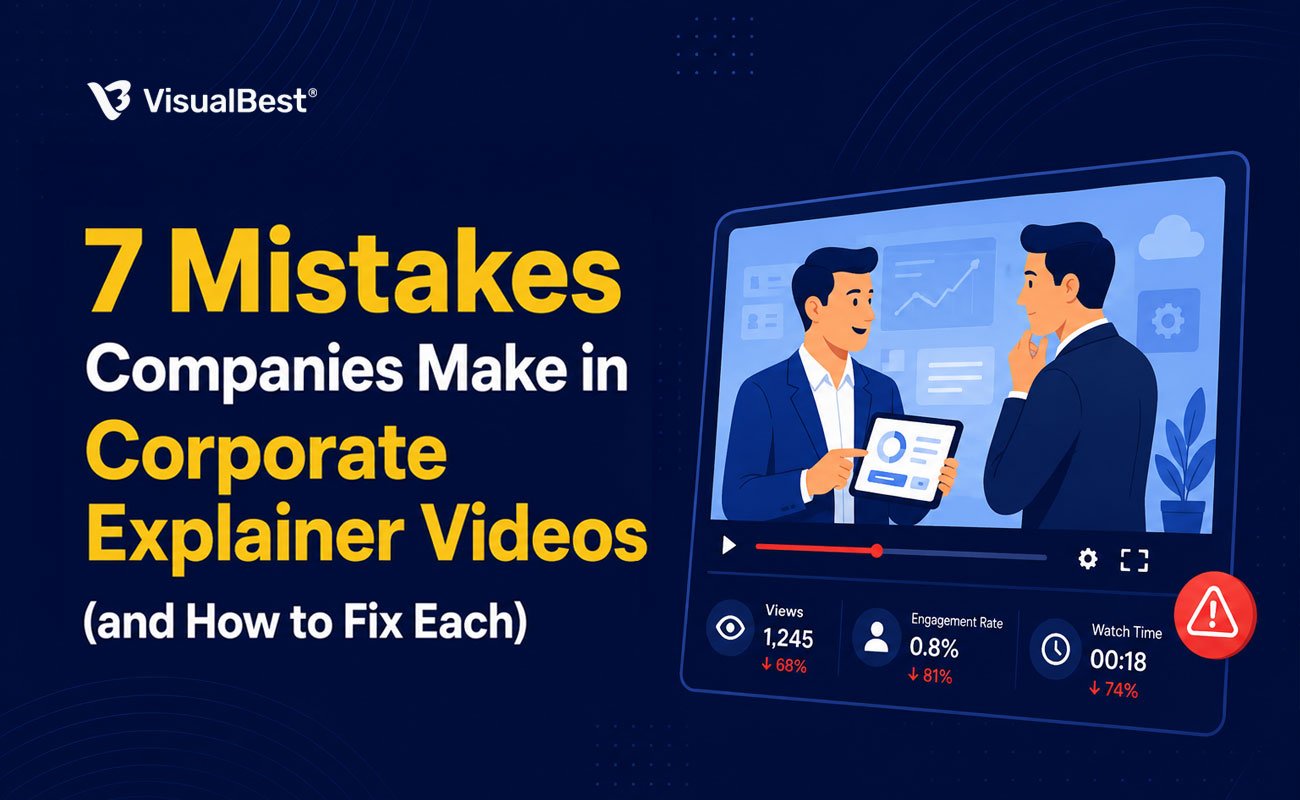
Your explainer video has 847 views. Your sales team has never once mentioned it. The animation is gorgeous, the voiceover is crisp — and it has moved nothing.
This is the quiet failure mode of corporate video: not a disaster, just a polished asset that doesn’t work, for reasons no one traces back to the brief. The format isn’t the problem — almost everyone watches explainer videos before they buy. The execution is. And the mistakes are remarkably consistent from company to company.
Here are the seven that do the most damage, and the fix for each.
1. Leading with the company instead of the customer
The tell: Logo, company name, feature list — then, finally, something the viewer cares about. By which point they’ve scrolled away.
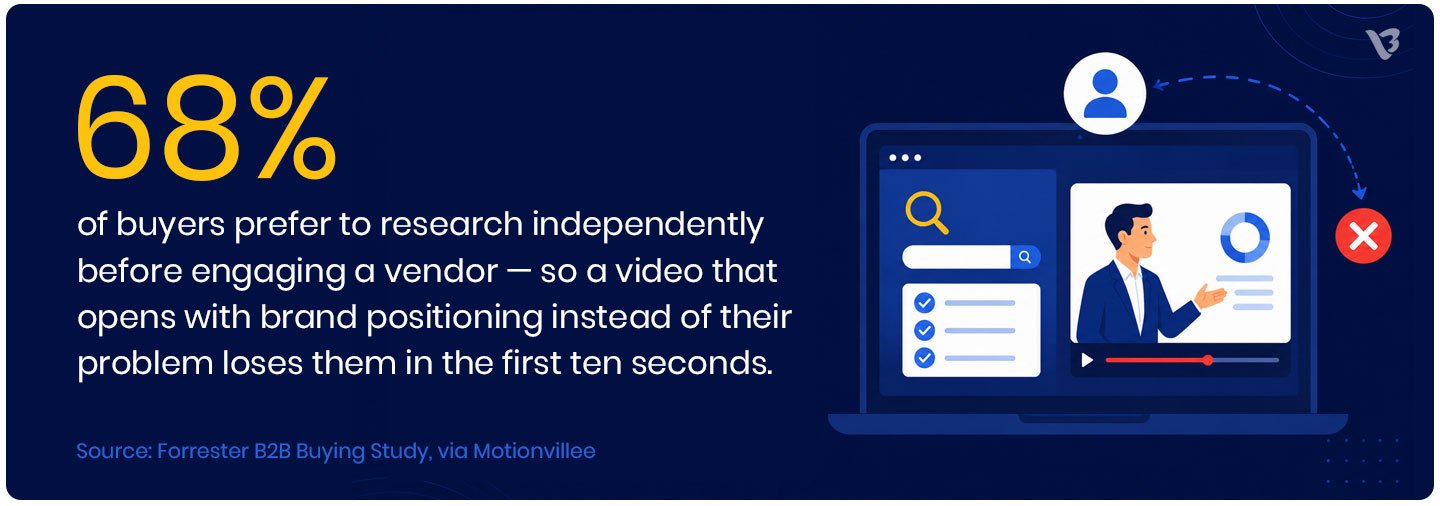
Buyers don’t care about your company until they believe you understand their problem. A explainer video that opens with brand positioning answers a question the viewer hasn’t asked yet.
The fix: Open on their pain, not your name. Earn the right to talk about yourself by first proving you get their world.
2. Trying to say everything
The tell: Every feature, every use case, every differentiator — crammed into 90 seconds. The result says nothing because it tries to say all of it.
A video made for everyone is a video made for no one. Overloaded scripts kill attention and retention.
The fix: One video, one core message, two or three supporting points at most. Everything else belongs in a deck, a demo, or the next video.
3. No script, or a weak one
The tell: The video was designed before it was written. Pretty visuals carrying a flat, fluffy, or rambling message.
The script is the spine. No amount of animation rescues a weak one — it just makes a forgettable video more expensively.
The fix: Write and lock the script first. If it doesn’t work read aloud in under 90 seconds, it won’t work animated. Visuals come after the words earn their place.

4. Too long
The tell: A three-minute “explainer” that’s really a product manual with music. Completion rates fall off a cliff well before the end.
Attention is brutal. Most effective explainers land in 60–90 seconds. Every extra second past the point costs you viewers.
The fix: Cut to the single clearest version of your message. If it runs long, the content isn’t too big for the time — the message isn’t sharp enough yet.
5. No call to action
The tell: The video ends. The viewer is interested. And then… nothing. No next step, no link, no ask.
A video that doesn’t tell the viewer what to do next wastes the attention it just earned.
The fix: End with one clear, single action — book a demo, start a trial, learn more. One ask, not five.
6. Forgetting it will be watched on mute, on a phone
The tell: A video that only makes sense with sound on, viewed full-screen. In reality most of its audience sees it muted, mid-scroll, on a small screen.
Design that assumes ideal viewing conditions fails in real ones.
The fix: Make it work silent — captions, on-screen text, visual storytelling that carries the message without audio. Optimise for mobile and for the feed, because that’s where it lives.
7. No distribution plan
The tell: The video gets made, posted once to the homepage, and forgotten. Production got 100% of the effort; distribution got none.
Creating the video is half the job. Getting it watched is the other half — and the half companies skip.
The fix: Plan distribution before production. Where will it run, in how many cut-downs, across which channels? A 90-second hero plus social cut-downs beats one video posted once.
The pattern underneath all seven
None of these mistakes are about animation, budget, or production quality. Every one is a strategy mistake — wrong audience, wrong message, wrong length, wrong channel, no next step. In 2026, production is cheap and accessible. Strategic discipline is the scarce thing. That’s what separates a video that gets ROI from one that just gets views.

Frequently asked questions
1. Why do most explainer videos fail?
Usually strategy, not production — wrong audience, overloaded message, or no clear call to action. The format works; the execution slips.
2. How long should a corporate explainer video be?
Most effective ones run 60–90 seconds. Completion rates drop sharply beyond that.
3. What’s the most common explainer video mistake?
Leading with the company instead of the customer’s problem. Open on their pain, not your logo.
4. Does a great script really matter more than animation?
Yes. Animation can’t rescue a weak script — it just makes a forgettable video more expensive.
5. Should explainer videos work without sound?
They must. Most are watched muted on mobile, so captions and visual storytelling are essential.
6. Is it worth hiring a professional for a corporate explainer video?
For high-stakes videos, yes — the value is in strategy and scripting, the exact areas where DIY videos fail.
Related reading
- When Should a Company Use an Explainer Video Instead of a Presentation? — make sure video is even the right format first.
- 10 Presentation Design Mistakes That Make Companies Look Unprofessional — the deck equivalent of this list.
- Best Corporate Presentation Design Examples in 2026 — when the answer is a deck, not a video.